Chip Production: How India Fits Into the Global Semiconductor Puzzle
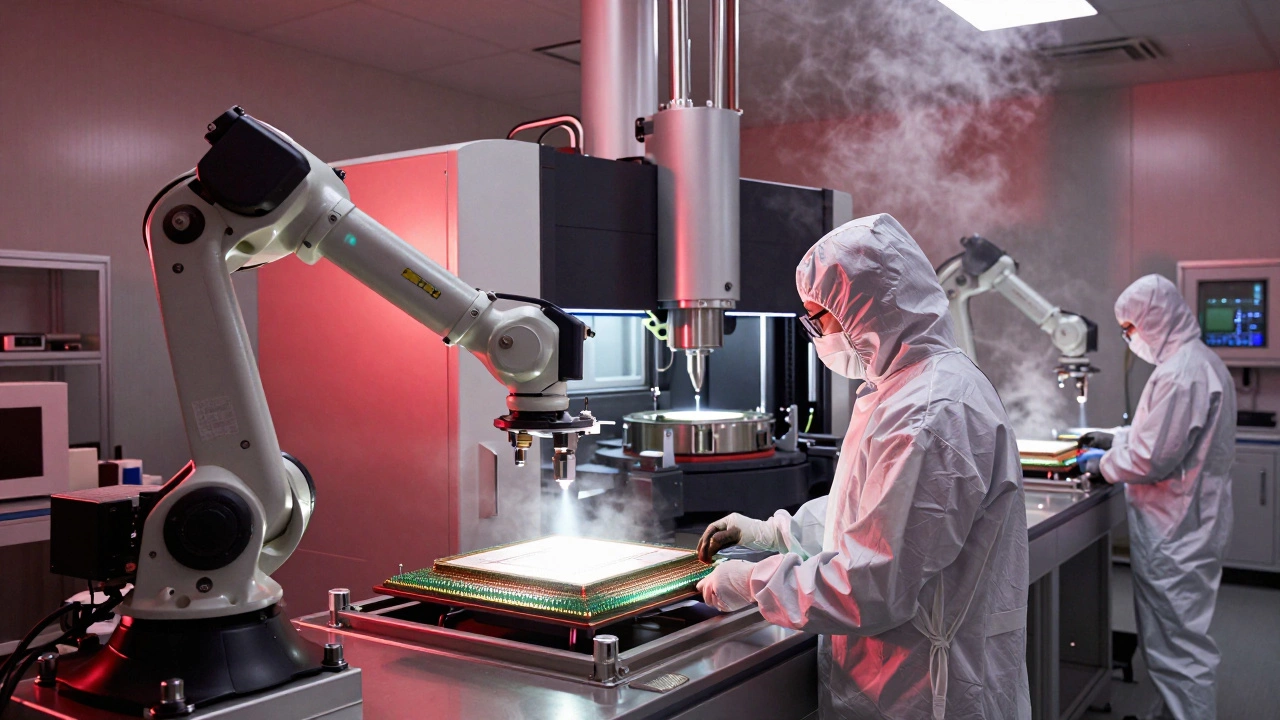
When you think of chip production, the process of designing and manufacturing semiconductor devices like microchips used in phones, cars, and medical gear. Also known as semiconductor manufacturing, it’s the hidden engine behind nearly every modern device. Most of the world’s chips come from just a few places—Taiwan, South Korea, and the U.S.—but that’s changing fast. Countries like India are now trying to build their own chip-making capacity, not just to save money, but to control their own tech future.
Chip production needs more than just factories. It requires specialized chemicals, high-purity materials like silicon wafers, etching gases, and photoresists used in cleanroom environments, which India still imports heavily from China and the U.S. It needs precision machinery, expensive tools from ASML, Applied Materials, and Tokyo Electron that cost millions each. And it needs engineers trained in nanoscale design—not just general electronics, but the exact science of building circuits smaller than a human hair. Right now, India is still learning how to do all this at scale.
But it’s not all hurdles. India already makes consumer electronics, from LED bulbs to smartphone parts that go to the U.S. and Europe. It has a growing pool of engineers, lower labor costs than China, and government incentives pushing for local chip plants. The real question isn’t whether India can make chips—it’s whether it can make them well enough, fast enough, and cheap enough to compete. The posts below show how India’s role in global manufacturing is shifting—from being a place that assembles gadgets to one that might one day build the brains inside them. You’ll see what’s working, what’s falling behind, and who’s really controlling the supply chain right now.