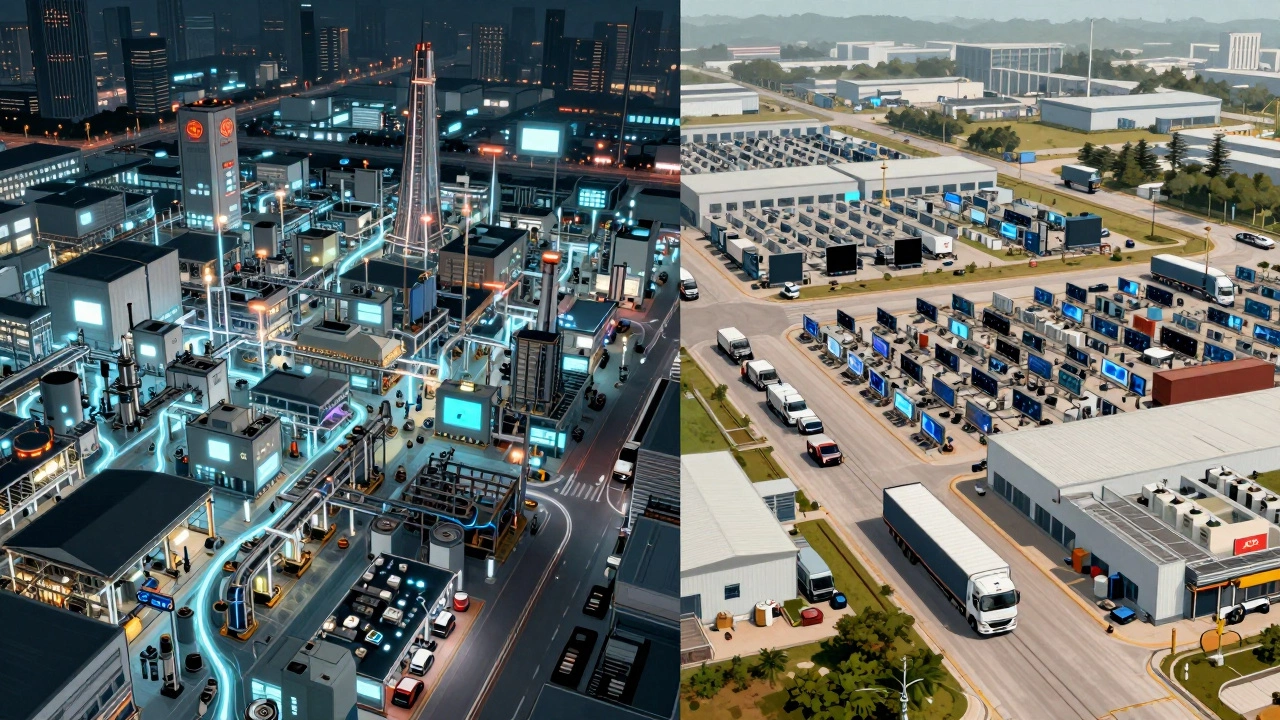
India vs China Manufacturing Cost Calculator
Product Parameters
Estimated Total Cost Breakdown
India
- Components: $0
- Labor: $0
- Logistics: $0
- Overhead: $0
China
- Components: $0
- Labor: $0
- Logistics: $0
- Overhead: $0
Walk into any electronics store in Mumbai or Bangalore today, and you will see the same reality that has persisted for decades: the vast majority of devices on those shelves were made in China. From your smartphone to the smart TV in your living room, the "Made in China" label is ubiquitous. Meanwhile, despite having a massive domestic market and a young workforce, India struggles to replicate this manufacturing dominance. You might wonder why a country with such potential hasn't become the next global factory floor.
The question isn't just about ambition; it's about structural mechanics. China didn't wake up one day as a manufacturing superpower. It spent thirty years building the roads, ports, and supplier networks that make production cheap and fast. India is trying to catch up, but the gap is wider than most people realize. It’s not just about labor costs anymore-it’s about logistics, policy consistency, and something called "agglomeration effects." Let’s break down exactly what holds India back and where things are heading in 2026.
The Power of Agglomeration: Why Suppliers Matter More Than Labor
If you want to build a smartphone in Shenzhen, China, you can walk across the street to buy screws, screens, batteries, and chips. This is known as agglomeration. In China, entire ecosystems exist for specific products. If you need a component for an electric vehicle, there are hundreds of specialized suppliers within a 50-kilometer radius. This density drives down costs and speeds up innovation because companies can prototype and iterate rapidly.
In contrast, India’s manufacturing landscape is fragmented. A mobile phone assembler in Tamil Nadu might source screens from Korea, batteries from Vietnam, and chips from Taiwan. Every time a component crosses a border, it incurs tariffs, shipping delays, and quality control checks. While India has improved its domestic sourcing-now over 60% of components for smartphones assembled in India are sourced locally-the high-value parts still come from abroad. Until India builds clusters of suppliers for these critical inputs, it remains an assembly hub rather than a true manufacturing powerhouse.
| Factor | China | India |
|---|---|---|
| Supply Chain Depth | Deep, localized clusters for almost every component | Fragmented; relies heavily on imported high-value parts |
| Logistics Cost | Approximately 8-10% of GDP | Approximately 13-14% of GDP |
| Labor Force | Aging, higher wages, highly skilled technicians | Young, lower wages, but skill gaps in advanced tech |
| Infrastructure | World-class ports, highways, and power grids | Improving rapidly via PM Gati Shakti, but bottlenecks remain |
| Policy Stability | Long-term state planning with consistent execution | Frequent policy shifts; complex tax compliance history |
Infrastructure: The Hidden Tax on Indian Goods
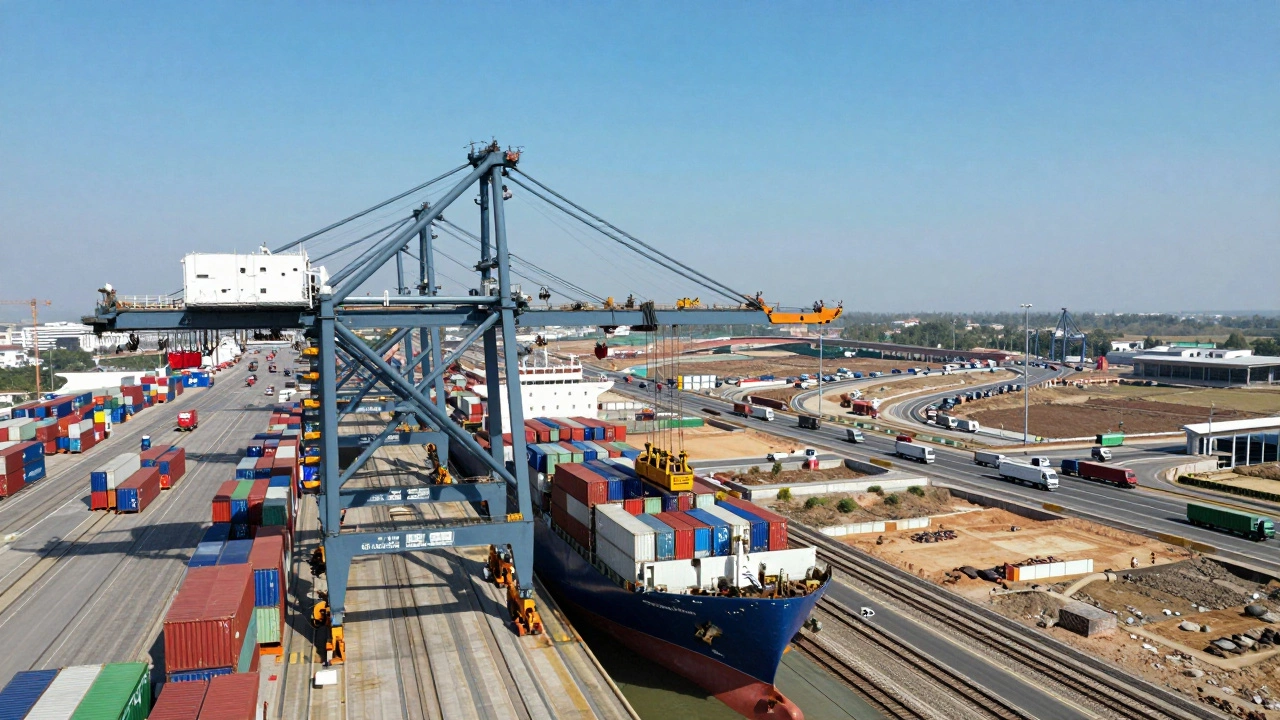
Let’s talk about moving goods. In China, a container can move from a factory in inland Sichuan to a port in Shanghai in days, thanks to an integrated network of high-speed rail, highways, and efficient customs clearance. In India, logistics costs eat up a significant portion of profit margins. According to recent data, logistics account for nearly 14% of India’s GDP, compared to around 8% in developed economies and China.
Why does this matter? Because when it costs more to move a product, the final price goes up, making Indian exports less competitive globally. Yes, the government has launched initiatives like the National Logistics Policy and the PM Gati Shakti master plan to digitize infrastructure planning. These are huge steps forward. But building ports, warehouses, and multi-modal transport hubs takes time. Until then, Chinese manufacturers benefit from a smoother, cheaper flow of materials and finished goods.
Land and Labor: The Human Factor
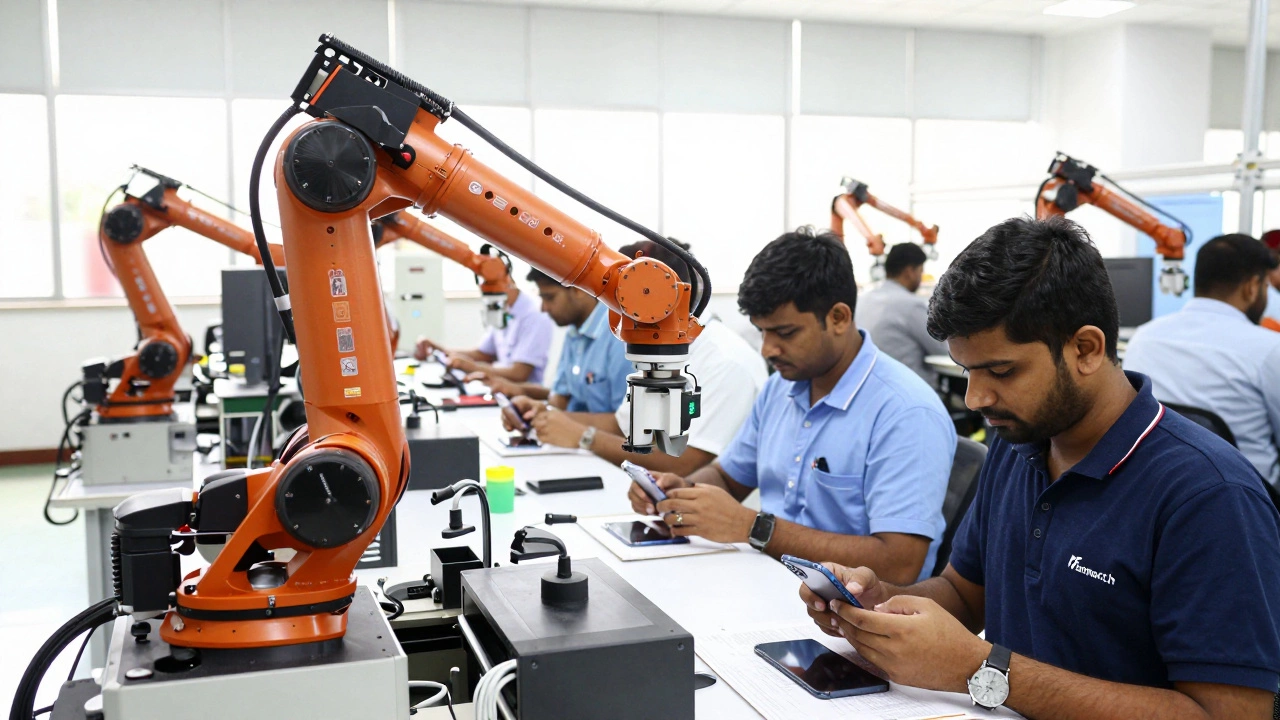
You’ve probably heard that India’s biggest advantage is its demographic dividend-a massive, young workforce. On paper, this looks perfect for labor-intensive industries. However, manufacturing requires more than just bodies; it requires skills. China invested heavily in vocational training decades ago. Their factory workers are adept at operating complex machinery and maintaining quality standards.
In India, the education system often prioritizes theoretical knowledge over practical skills. There is a shortage of technicians who can maintain automated production lines. Furthermore, land acquisition in India is notoriously difficult due to legal complexities and local resistance. Setting up a large-scale plant involves navigating a maze of regulations that can delay projects by years. In China, local governments often clear land and provide subsidies to attract investors, creating a plug-and-play environment for factories.
The Semiconductor Challenge: High Tech, High Barrier
No discussion about India vs. China manufacturing is complete without mentioning semiconductors. Chips are the backbone of modern electronics, and China dominates the packaging and testing segment while relying on TSMC and Samsung for cutting-edge fabrication. India is trying to enter this space through the Production Linked Incentive (PLI) scheme, offering cash incentives to companies that set up fabs and design centers here.
However, semiconductor manufacturing is incredibly capital-intensive and technically demanding. It requires ultra-pure water, stable power supplies, and a highly specialized workforce. Companies like Micron have announced investments in India, which is a positive sign. But building a self-sufficient ecosystem-from sand to silicon wafers to packaged chips-will take another decade or more. China already has a robust, albeit sanctioned, domestic chip industry. India is starting from scratch, which means high initial risks and slower returns.
Policy Consistency and Ease of Doing Business
Businesses hate uncertainty. For years, India struggled with changing tax laws, particularly the implementation of the Goods and Services Tax (GST). While GST has simplified indirect taxation in the long run, the transition was painful, causing cash flow issues for many small manufacturers. Additionally, compliance burdens remain high. A factory owner in India spends countless hours dealing with multiple agencies for environmental clearances, labor licenses, and safety inspections.
China, under its centralized governance model, can implement policies swiftly and uniformly across provinces. When Beijing decides to support solar panels or electric vehicles, resources are allocated immediately. India’s federal structure means states have varying rules and incentives. While this allows for local customization, it creates a patchwork quilt of regulations that multinational corporations find confusing. Recent reforms like the Insolvency and Bankruptcy Code and corporate tax cuts have helped, but trust takes time to rebuild.
Where Is India Heading? The Realistic Outlook
So, is India doomed to remain a secondary player? Absolutely not. The narrative is shifting. Global brands are actively pursuing a "China Plus One" strategy to diversify their supply chains away from geopolitical risks associated with China. India is the primary beneficiary of this shift.
Companies like Apple have significantly increased iPhone production in India. Foxconn and Pegatron now operate massive plants in Tamil Nadu. The key difference is that India is focusing on high-value assembly and gradually moving up the value chain. Instead of trying to copy China’s low-cost, mass-production model, India is leveraging its digital infrastructure (like UPI and Aadhaar) to create a more efficient, transparent manufacturing environment.
The goal isn’t necessarily to become the "new China" but to become a distinct, resilient node in the global supply chain. With continued investment in infrastructure, skill development, and stable policies, India could capture a significant share of global electronics manufacturing by 2030. It won’t happen overnight, but the foundation is being laid right now.
Is India cheaper than China for manufacturing?
Labor costs in India are indeed lower than in China, but total cost of ownership tells a different story. When you factor in higher logistics costs, inefficient supply chains, and compliance burdens, the overall expense can be comparable or even higher in India. However, as infrastructure improves and scale increases, India’s cost competitiveness is rising rapidly.
What is the PLI scheme and how does it help?
The Production Linked Incentive (PLI) scheme provides financial incentives to manufacturers based on the value of goods produced in India. It aims to boost domestic production in sectors like electronics, pharmaceuticals, and automobiles. By reducing the effective cost of production, it encourages companies to set up factories in India rather than importing finished goods.
Can India replace China as the world’s factory?
It is unlikely that India will fully replace China in the near future. China’s infrastructure and supply chain depth are unmatched. Instead, India is positioning itself as a complementary alternative, attracting companies looking to diversify risk. The goal is to capture a significant share of global manufacturing, particularly in electronics and textiles, rather than dominating every sector.
Why do companies still prefer Vietnam over India?
Vietnam offers a simpler regulatory environment, easier land acquisition, and strong trade agreements with major economies like the EU and the US. While India has a larger market, Vietnam’s streamlined bureaucracy and strategic location make it an attractive option for smaller-scale, agile manufacturing operations. India is working to close this gap through policy reforms.
What role does the domestic market play in India’s manufacturing growth?
India’s massive domestic consumer base is its biggest asset. Unlike countries that rely solely on exports, Indian manufacturers can sell to a population of 1.4 billion people. This reduces dependency on volatile global demand and allows companies to achieve economies of scale before exporting. As incomes rise, demand for premium electronics and appliances will drive further industrial expansion.