Manufacturing Leadership & Grant Readiness Checker
Select a role to explore responsibilities and their impact on government scheme eligibility.
Select a Role
Click on any role card to see detailed insights and grant implications.
Test Your Knowledge: Grant Readiness
Walk into any large factory floor, and you might assume the loudest person or the one with the biggest title is in charge. But who actually runs a manufacturing company? It’s rarely just one person. While the CEO sets the vision, the daily heartbeat of production relies on a complex web of specialized leaders. From the plant manager keeping machines running to the supply chain director ensuring raw materials arrive on time, each role is critical.
If you are looking to start a manufacturing business or trying to understand how these organizations function to apply for government manufacturing schemes, knowing this hierarchy is essential. You need to know who signs off on budgets, who handles compliance, and who drives efficiency. This guide breaks down the key players in manufacturing leadership and how they interact with external support systems like state and federal incentives.
The Executive Layer: Strategy and Vision
At the very top sits the C-suite. In manufacturing, this isn’t just about finance and marketing; it’s deeply tied to operational capability. The Chief Executive Officer (CEO) defines the long-term strategy, but the Chief Operating Officer (COO) is often the real engine room for production companies.
Chief Operating Officer (COO) is the executive responsible for overseeing the day-to-day administrative and operational functions of a business. In manufacturing, the COO bridges the gap between high-level corporate goals and the physical reality of the factory floor. They ensure that the company can produce goods at scale while maintaining quality standards and cost controls.Beneath them, you have the Vice President of Operations. This person translates the COO’s directives into actionable plans for regional plants or specific product lines. They are the ones who decide whether to invest in new automation technology or restructure shifts to meet demand spikes. Without this layer, the strategic vision never leaves the boardroom.
The Plant Manager: The Heartbeat of Production
If the CEO is the brain, the Plant Manager is the heart. This role is arguably the most critical in traditional manufacturing. A Plant Manager oversees all activities within a specific facility. Their job is multifaceted: they manage personnel, ensure safety protocols are followed, maintain equipment, and hit production targets.
- Safety First: They are ultimately responsible for OSHA compliance and worker safety. An accident stops production and invites legal trouble.
- Efficiency Metrics: They track Overall Equipment Effectiveness (OEE), downtime, and waste reduction. Every minute a machine is idle costs money.
- Team Leadership: They supervise shift supervisors, maintenance crews, and quality control teams.
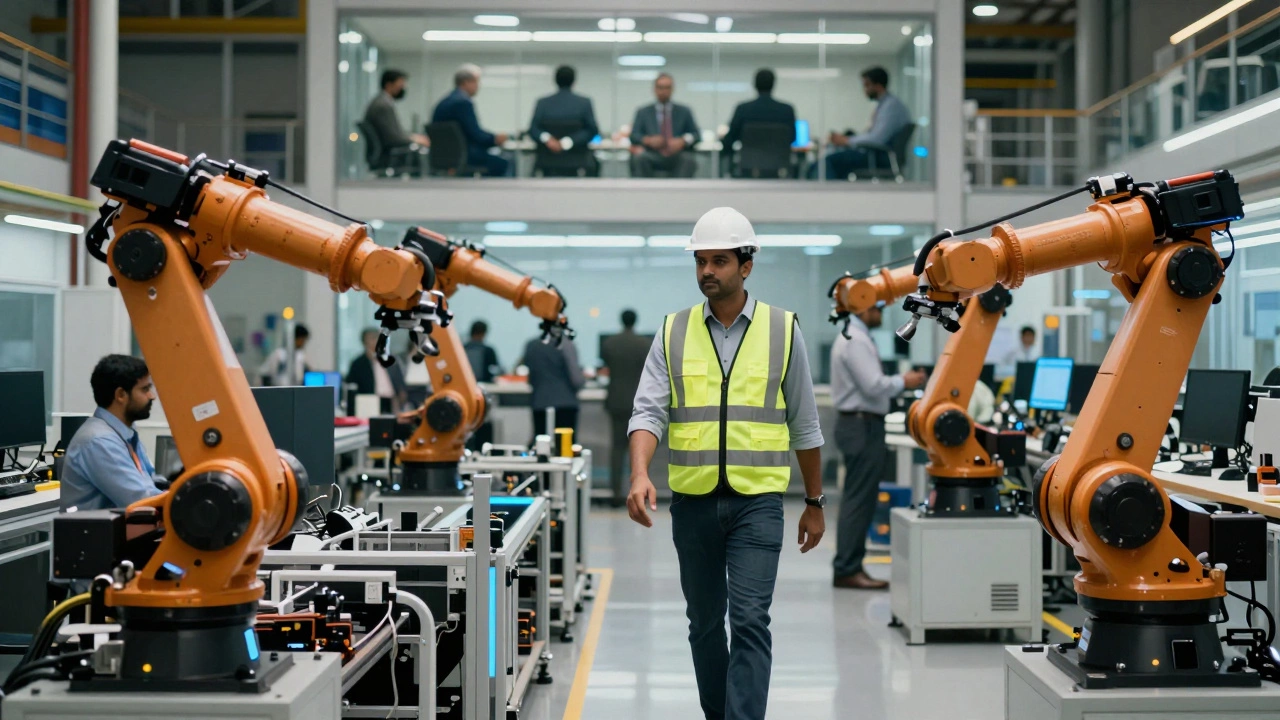
A good plant manager doesn’t just sit in an office. They walk the floor. They know which machines are prone to breaking down and which shifts have higher error rates. When applying for government grants focused on workforce development or safety improvements, the plant manager is usually the primary point of contact because they understand the ground-level needs best.
Supply Chain and Logistics Leaders
You can’t manufacture anything without raw materials. This is where the Supply Chain Director and Procurement Managers come in. These roles have become increasingly vital due to global disruptions. A delay in steel shipments from overseas can halt an entire automobile assembly line.
The Supply Chain Director designs the network of suppliers, warehouses, and transportation routes. They negotiate contracts, manage inventory levels to avoid overstocking or stockouts, and mitigate risks. In recent years, this role has expanded to include sustainability goals, such as sourcing eco-friendly materials or reducing carbon footprints in logistics.
Procurement managers handle the actual buying. They work closely with engineers to specify material requirements and with finance to control costs. If you are running a small-scale manufacturing unit, you might be doing this yourself. As you grow, delegating this to a specialist prevents costly mistakes, like locking into a bad supplier contract or missing out on bulk discounts.

Quality Assurance and Control
In manufacturing, reputation is everything. One defective batch can lead to recalls, lawsuits, and lost customers. That’s why Quality Assurance (QA) and Quality Control (QC) are not just departments-they are gatekeepers.
The QA Manager develops the processes and standards that prevent defects from happening in the first place. They create the checklists, train the staff, and audit the procedures. QC inspectors, on the other hand, check the final products. They use tools like calipers, spectrometers, and visual inspections to ensure every item meets specifications.
Many Government Schemes for manufacturing offer tax credits or subsidies for companies that achieve certain quality certifications, such as ISO 9001. Having a dedicated QA leader helps navigate these requirements and positions the company for growth through credibility.
Maintenance and Engineering Teams
Machines break. It’s inevitable. The Maintenance Manager ensures that breakdowns are minimized and repairs are swift. They oversee preventive maintenance schedules, manage spare parts inventory, and lead the repair crew. In modern factories, this role is evolving with Industry 4.0 technologies, using sensors and data analytics to predict failures before they happen.
Meanwhile, the Manufacturing Engineer focuses on process improvement. They design the assembly lines, select the right machinery, and optimize workflows. If a product takes too long to assemble, the engineer finds a way to streamline it. They are the innovators who keep the factory competitive by adopting new technologies like robotics or AI-driven monitoring.
| Role | Primary Responsibility | Key Metric Tracked |
|---|---|---|
| CEO/COO | Strategic direction and operational oversight | Revenue, Profit Margin |
| Plant Manager | Daily facility operations and safety | Production Output, Safety Incidents |
| Supply Chain Director | Material sourcing and logistics | Lead Time, Inventory Cost |
| QA Manager | Process standards and defect prevention | Defect Rate, Compliance Score |
| Maintenance Manager | Equipment reliability and repair | Mean Time Between Failures (MTBF) |

How Government Schemes Fit Into Leadership
Understanding who runs the company is crucial when leveraging government support. Many countries offer incentives to boost local manufacturing, reduce emissions, or create jobs. However, these schemes often require detailed reporting and strict adherence to guidelines.
The Finance Director or CFO typically leads the application process for financial incentives, such as tax rebates or low-interest loans. They must prove that the funds will be used for eligible expenses, like purchasing new machinery or hiring local workers. Meanwhile, the Plant Manager provides the technical data needed to justify the investment, such as projected output increases or energy savings.
For example, if a scheme offers grants for upgrading to energy-efficient equipment, the Engineering Team assesses the technical feasibility, the Supply Chain team sources the vendors, and the Finance team calculates the ROI. Collaboration across these roles is key to successfully accessing and utilizing government resources.
Next Steps for Aspiring Manufacturers
If you are starting out, you might wear many hats initially. But as you grow, identify which areas need specialized attention. Do you struggle with late deliveries? Hire a strong Supply Chain lead. Are defect rates high? Invest in a QA expert. Align your leadership structure with your biggest pain points.
Research available government schemes early. Talk to industry associations or consult with experts who specialize in manufacturing incentives. They can help you understand what documentation you’ll need and which roles should take the lead. Building a robust leadership team not only keeps your factory running smoothly but also unlocks opportunities for growth through external support.
What is the difference between a Plant Manager and a Factory Manager?
The terms are often used interchangeably, but there can be subtle differences. A Plant Manager typically oversees a single facility with full responsibility for operations, safety, and personnel. A Factory Manager might focus more specifically on production output and may report to a broader Operations Director who handles multiple sites. In smaller companies, one person often holds both titles.
Who is responsible for applying for government manufacturing grants?
Usually, the Finance Director or CFO leads the financial aspects of grant applications, ensuring budget compliance and ROI projections. However, it is a collaborative effort. The Plant Manager or Operations Director provides technical details about how the funds will be used, such as equipment upgrades or process improvements. Legal teams may also review compliance requirements.
How does a Supply Chain Director impact manufacturing costs?
A Supply Chain Director directly impacts costs by negotiating better prices with suppliers, optimizing inventory levels to reduce storage fees, and choosing efficient transportation methods. They also mitigate risks like supply shortages, which can cause expensive production delays. Effective supply chain management can significantly lower the overall cost of goods sold.
What skills are essential for a Manufacturing Engineer?
Manufacturing Engineers need strong problem-solving skills, knowledge of lean manufacturing principles, and proficiency with CAD software and data analysis tools. They must understand both mechanical systems and software-driven automation. Communication skills are also vital, as they collaborate with operators, designers, and management to implement process changes.
Can a small manufacturing business afford to hire all these roles?
Not initially. Small businesses often combine roles. For example, the owner might act as CEO, Plant Manager, and Procurement Officer. As the company grows, they can hire specialists for each function. Alternatively, they can outsource certain functions, like logistics or quality auditing, to third-party providers until internal hiring becomes feasible.