Indian Wood Strength & Hardness Calculator
Compare the structural integrity, hardness, and suitability of top Indian hardwoods for your furniture manufacturing needs.
Suitability Analysis:
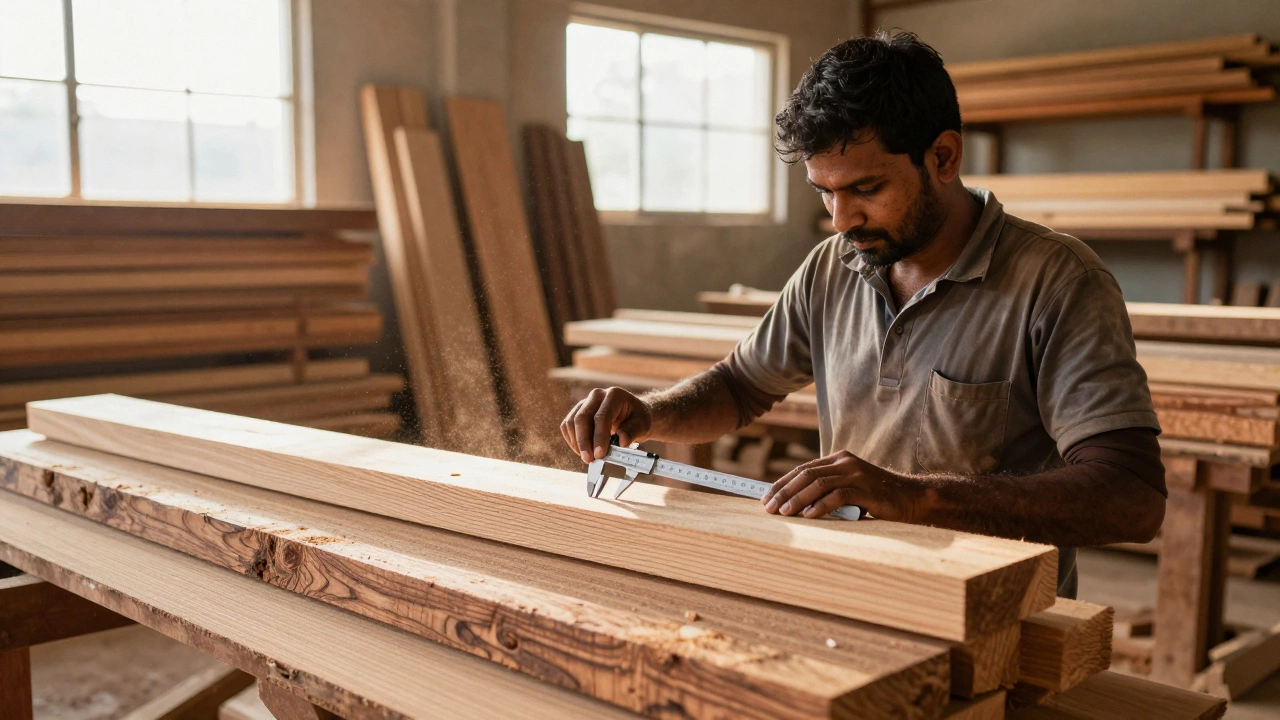
You are standing in a workshop, looking at a stack of raw timber. You need to build a dining table that will last forty years, not four. The question isn't just about looks; it is about structural integrity. Which Indian wood can handle the weight, the humidity, and the daily wear without warping or cracking? For furniture manufacturers in India, the answer determines your profit margin and your reputation.
India is one of the few countries with a vast diversity of hardwood species. However, "strength" means different things in engineering versus carpentry. Are you looking for crushing strength (how much weight it takes before it squashes)? Bending strength (how much force it takes before it snaps)? Or durability (resistance to termites and rot)? Most beginners look only at density, but density alone doesn't tell the whole story. A dense wood might be brittle, while a slightly less dense wood might have better tensile strength.
The Gold Standard: Teak (Tectona grandis)
Teak is the most prized hardwood in India, known for its high oil content and natural resistance to water and insects. It belongs to the Lamiaceae family and is native to South and Southeast Asia.
If money were no object, you would use Teak for everything. It is the benchmark against which all other Indian woods are measured. Why? Because of its silica content and natural oils. These oils repel water, making Teak ideal for outdoor furniture, boat decks, and kitchen cabinets where moisture is a constant threat.
In terms of pure mechanics, Teak has a Janka hardness rating of approximately 1,070 lbf (4,760 N). This puts it in the upper tier of domestic hardwoods. But its real superpower is stability. Teak shrinks very little as it dries. If you build a large cabinet door from cheaper pine, it will warp within months. Teak stays flat. For high-end furniture manufacturers, this reduces waste and returns. The downside? Price. Genuine plantation Teak costs significantly more than alternatives, and illegal wild-harvested Teak carries reputational risks.
The Heavyweight Champion: Sal (Shorea robusta)
Sal is an extremely dense and strong deciduous tree found primarily in the Eastern Ghats and Chota Nagpur Plateau. It is often used in railway sleepers and heavy construction due to its immense compressive strength.
If you want raw power, look at Sal. Often called the "King of Indian Woods" in industrial contexts, Sal is denser than Teak. Its specific gravity ranges from 0.75 to 0.90, compared to Teak's 0.65 to 0.75. This makes Sal incredibly resistant to crushing forces. Historically, it was the go-to wood for railway tracks because it could withstand the pounding of trains without splintering.
For furniture, Sal is excellent for legs, frames, and structural components. It is harder to work with than Teak-you need sharper tools and slower feed rates-but it holds screws exceptionally well. The grain is straight and uniform, giving it a clean, modern look when polished. However, Sal is prone to checking (cracking) if not dried properly. Kiln-drying is non-negotiable here. If you buy air-dried Sal, expect shrinkage issues.
The Rising Star: Indian Rosewood (Dalbergia latifolia)
Indian Rosewood is a premium hardwood known for its rich color, fine texture, and exceptional acoustic properties. It is a member of the Fabaceae family and is heavily regulated under CITES.
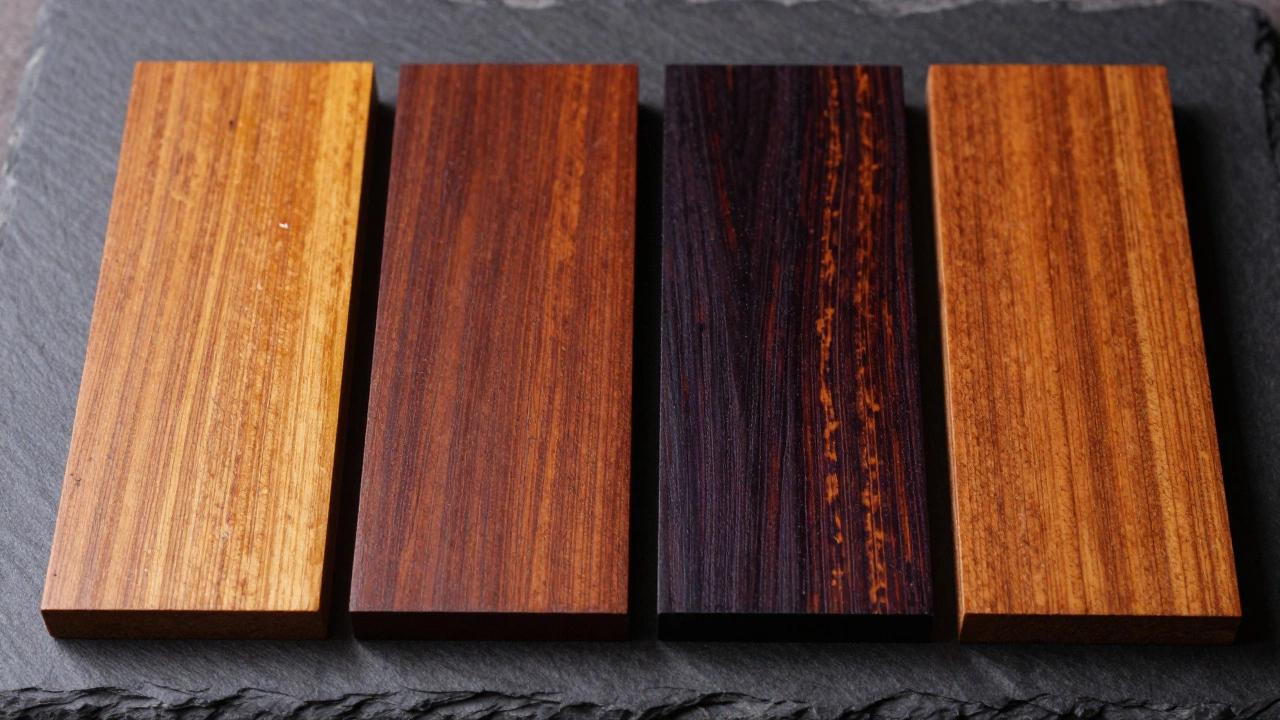
Don't confuse this with African Rosewood or Brazilian Rosewood. Indian Rosewood, also known as Sonaj, is distinct. It is slightly softer than Sal but harder than Teak, with a Janka rating around 1,300 lbf. Its strength lies in its balance. It is tough enough for heavy-use furniture but fine-grained enough for intricate carving. This makes it the favorite for luxury chairs, tables, and musical instruments.
The aesthetic appeal is unmatched. The heartwood ranges from deep brown to purple-black, often with striking golden streaks. It polishes to a mirror finish without needing much varnish. However, supply is tightly controlled. As a manufacturer, you must ensure your source has valid CITES permits. Using uncertified Rosewood can lead to legal trouble and brand damage. It is expensive, but for boutique furniture lines, the perceived value justifies the cost.
The Workhorse: Sheesham (Indian Laurel)
Sheesham is also known as Indian Laurel or Dalbergia sissoo, widely regarded as the best commercial alternative to Teak. It is abundant across Northern India and offers excellent durability at a lower price point.
If you run a mid-range furniture business, Sheesham is your bread and butter. It is often marketed as "Indian Teak" because of its similar grain pattern and durability, though it lacks the natural oils of true Teak. Its density is comparable to Teak, and it is highly resistant to termites and fungi. This makes it perfect for indoor furniture like beds, wardrobes, and dining sets.
Sheesham is easier to machine than Sal and cheaper than Rosewood. It glues and finishes well, accepting stains evenly. One caveat: it can be prone to slight warping if the humidity fluctuates drastically. Proper sealing is essential. For export markets, Sheesham is gaining popularity as a sustainable, ethical alternative to endangered hardwoods. It strikes the right balance between performance, aesthetics, and affordability.
Honorable Mentions: Mahua, Bamboo, and Eucalyptus
Not every project needs exotic hardwood. Sometimes, local availability and speed matter more. Mahua (Madhuca indica) is a medium-density wood that is easy to carve. It is less durable than Teak but works well for decorative items and lighter furniture. Bamboo, technically a grass, has incredible tensile strength-often stronger than steel by weight. Engineered bamboo panels are becoming popular for modern, eco-friendly furniture. Eucalyptus is fast-growing and cheap, but it requires heavy chemical treatment to resist pests. Use it for temporary structures or low-cost items, not heirlooms.
| Wood Species | Janka Hardness (lbf) | Density (kg/m³) | Durability Class | Best Use Case |
|---|---|---|---|---|
| Teak | 1,070 | 650-750 | Very High | Outdoor, Luxury Indoor |
| Sal | 1,200+ | 750-900 | High | Structural Frames, Heavy Tables |
| Indian Rosewood | 1,300 | 800-900 | Very High | Carving, Acoustic Instruments |
| Sheesham | 1,000 | 600-700 | High | Mid-Range Furniture, Export |
| Mahua | 600 | 500-600 | Medium | Decorative Items, Light Furniture |
How to Choose: Beyond Just Strength
Strength is only one factor. Consider these three additional criteria:
- Machinability: Can your current tools handle the wood? Sal and Rosewood dull blades quickly. If you don't have diamond-tipped saws or carbide routers, stick to Sheesham or Teak.
- Drying Time: Green wood moves. Kiln-dried wood costs more upfront but saves you from customer complaints later. Always ask for moisture content certificates (aim for 10-12% for indoor furniture).
- Sustainability: Consumers care about origins. FSC-certified Teak and Sheesham are safer bets than uncertified wild harvests. Document your supply chain.
Common Mistakes to Avoid
Many new manufacturers fall into the trap of buying "cheap Teak." Often, this is actually Afzelia or Iroko, imported and mislabeled. Learn to identify grain patterns. Teak has a distinctive oily feel and interlocked grain. Another mistake is ignoring end-grain sealing. Even the strongest wood absorbs moisture through the ends. Seal them with epoxy or wax to prevent cracking. Finally, don't mix woods with vastly different expansion rates in the same joint. Joining Sal with Pine will result in separation as seasons change.
Is Teak really stronger than Sal?
In terms of pure density and crushing strength, Sal is often denser and harder than Teak. However, Teak has superior tensile strength and stability due to its natural oils. Sal is better for static loads, while Teak handles dynamic stress and moisture better.
What is the cheapest strong Indian wood for furniture?
Sheesham (Indian Laurel) offers the best balance of strength and affordability. It is significantly cheaper than Teak and Rosewood but provides excellent durability for indoor furniture. Mahua is cheaper but less durable.
Can I use Sal wood for outdoor furniture?
Yes, Sal is durable and resistant to decay, but it lacks the natural water-repellent oils of Teak. If used outdoors, it requires regular sealing and maintenance to prevent weathering and cracking.
Is Indian Rosewood legally available for purchase?
Yes, but it is strictly regulated under CITES. You must ensure your supplier has valid documentation proving sustainable harvesting. Illegal trade is common, so due diligence is critical for manufacturers.
How do I prevent wood from warping after manufacturing?
Use kiln-dried wood with a moisture content of 10-12%. Seal all end grains. Design joints that allow for slight movement (like floating tenons). Avoid mixing woods with different expansion coefficients in the same assembly.