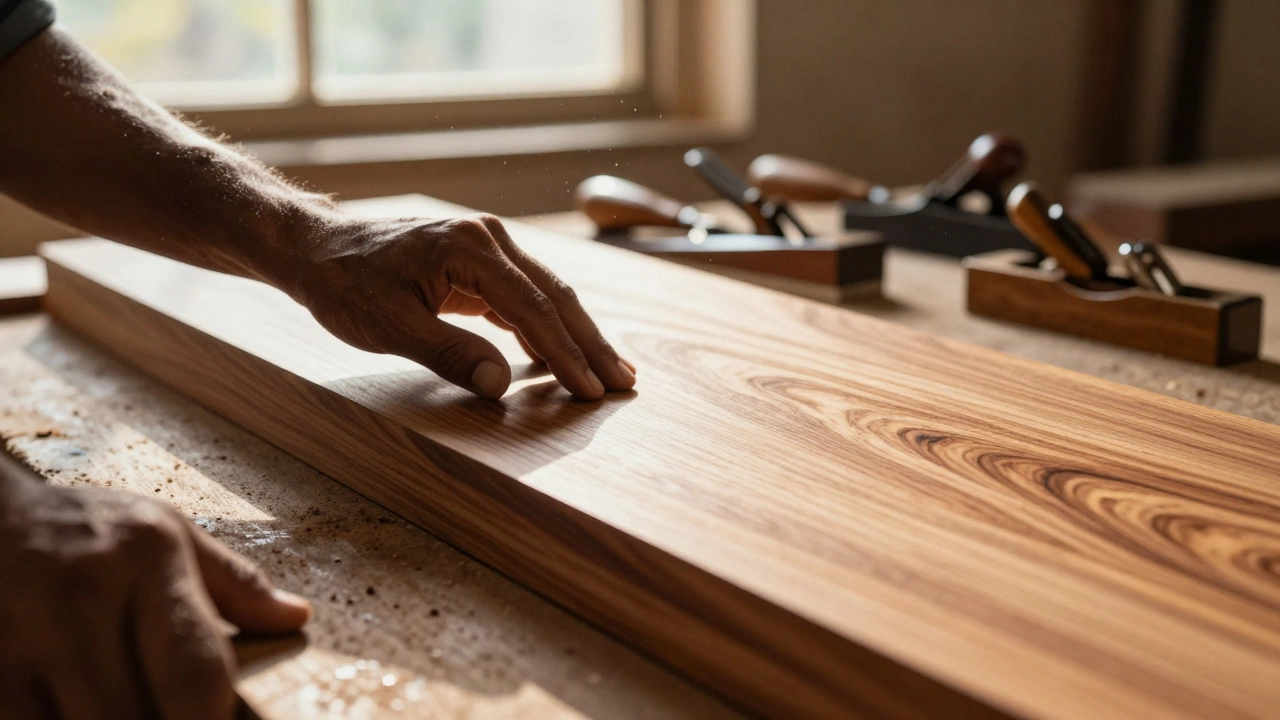
Indian Furniture Wood Selector
Answer three simple questions to find the perfect wood for your project.
Analyzing wood properties...
Recommended:
Why this fits:
- Density:
- Best For:
- Maintenance:
Performance Ratings
DurabilityWalk into any high-end furniture store in Mumbai or Delhi, and you’ll likely hear the word "teak" tossed around like it’s the only wood that matters. But if you’ve ever tried to buy a solid wooden chair without breaking the bank, you know the reality is more complex. The Indian furniture industry relies on a diverse palette of timber, each with distinct grains, durability levels, and price tags. Understanding these woods isn’t just about aesthetics; it’s about knowing what you’re paying for and whether that dining table will survive your family gatherings for the next twenty years.
The choice of wood defines the soul of Indian furniture. From the royal heritage of Teak to the resilient charm of Sheesham, every species tells a story of origin, craftsmanship, and utility. This guide breaks down the most common woods used by manufacturers across India, helping you make smarter choices whether you are furnishing a home or starting a manufacturing line.
The Gold Standard: Why Teak Dominates
When people talk about premium Indian furniture, they almost always start with Teak (Tectona grandis). It is the heavyweight champion of the industry. Native to South and Southeast Asia, teak is prized for its natural oils and silica content, which act as built-in preservatives against moisture, insects, and decay.
In terms of performance, teak is unmatched for outdoor use and high-humidity environments. If you live in coastal areas like Goa or Kerala, teak is practically non-negotiable for exterior furniture because it won’t warp or rot easily. For indoor use, it offers exceptional stability. A well-made teak sofa frame can last generations without sagging.
However, this durability comes at a cost. Genuine teak is expensive due to strict government regulations on harvesting wild teak in India. Most legal teak today comes from plantations, which take 25-30 years to mature. When buying teak furniture, look for a golden-brown hue that darkens with age. Be wary of pale, yellowish wood labeled as teak-it might be a cheaper substitute or plantation-grade timber with less oil content.
- Density: High (approx. 650 kg/m³ when air-dried)
- Workability: Moderate (silica dulls tools quickly)
- Best Use: Outdoor furniture, heirloom pieces, marine applications
- Price Point: Premium
The Rising Star: Sheesham (Indian Rosewood)
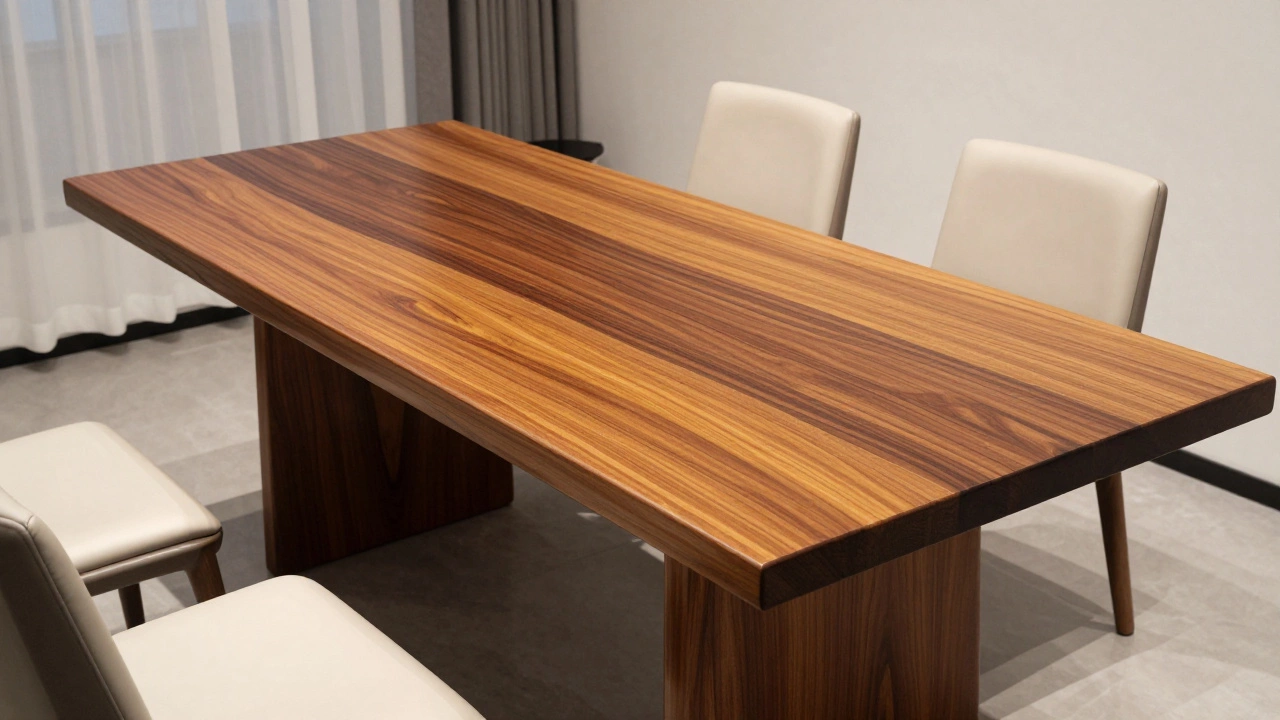
If teak is the king, Sheesham (Dalbergia sissoo or Indian Rosewood) is the versatile prince. In recent years, sheesham has become the go-to alternative for mid-range to premium furniture. It belongs to the rosewood family but is far more affordable than African or Brazilian rosewoods.
Sheesham is known for its striking grain patterns, often featuring dark brown streaks against a lighter background. This makes it incredibly popular for modern and rustic designs where the wood’s natural beauty is the focal point. Unlike teak, sheesham requires a good finish to protect it from moisture, making it better suited for indoor environments.
For furniture manufacturers, sheesham is a dream to work with. It bends well for curved chair backs and takes stains and polishes beautifully. Its density is comparable to teak, offering great structural integrity. If you are looking for a dining table that feels substantial and looks elegant without the teak price tag, sheesham is your best bet.
- Density: High (approx. 700 kg/m³)
- Workability: Excellent (holds screws and nails well)
- Best Use: Dining tables, bed frames, cabinets, decorative panels
- Price Point: Mid-to-High
Budget-Friendly Durability: Mango Wood
Here’s a surprising fact: one of the fastest-growing segments in the Indian furniture market is driven by fruit trees. Mango Wood comes from mango orchards that have reached the end of their productive life. Instead of letting these trees go to waste, upcyclers harvest them for furniture production.
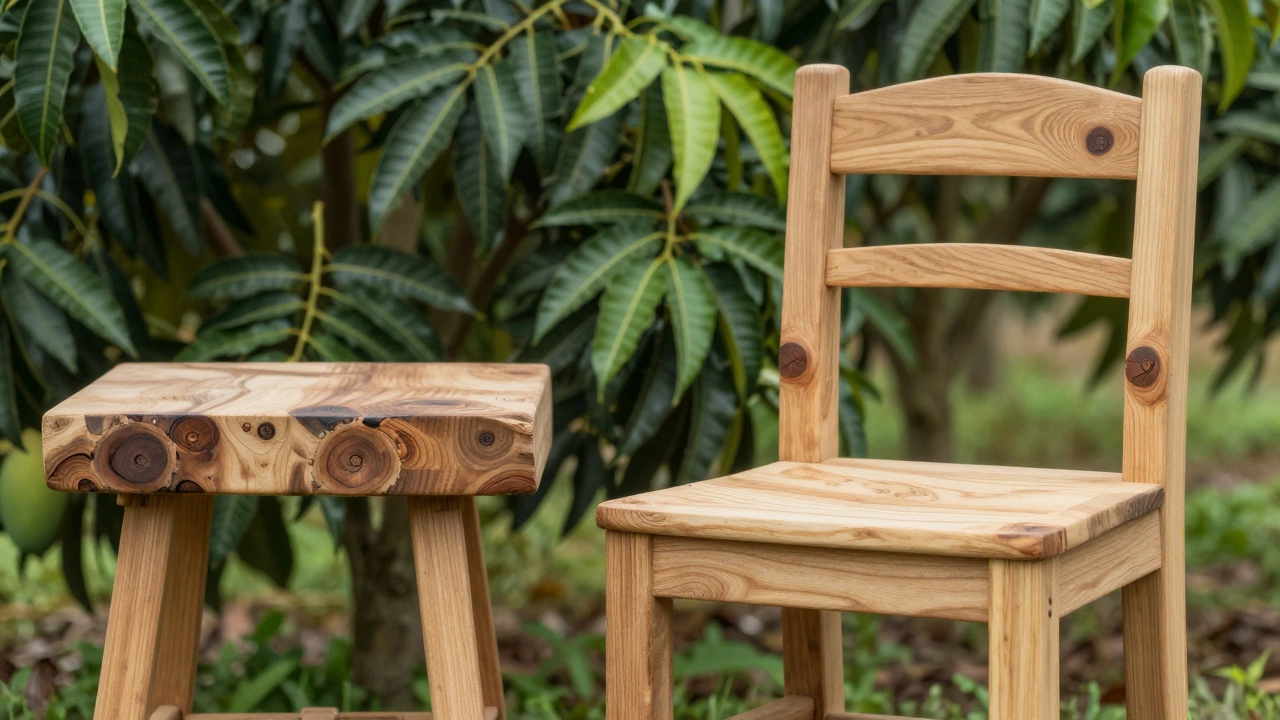
Mango wood is dense, hard, and surprisingly durable. It has a unique, swirling grain pattern that varies wildly from piece to piece, giving each item a one-of-a-kind character. Because it is a fast-growing tree, mango wood is considered an eco-friendly option. It doesn’t require cutting down old-growth forests, reducing the carbon footprint significantly.
The downside? Mango wood is prone to color variation and can sometimes contain knots or voids. It also reacts to humidity changes more than teak, so it needs proper sealing. Despite this, it has gained massive popularity in export markets, particularly in Europe and North America, for its rustic charm and sustainability story.
- Density: Medium-High (approx. 600-700 kg/m³)
- Workability: Good (requires careful drying to prevent cracking)
- Best Use: Rustic chairs, side tables, shelving units
- Price Point: Affordable-Mid Range
Traditional Favorites: Teak Alternatives
Not every project needs teak or sheesham. For specific styles and budgets, other native Indian woods play crucial roles.
Sal Wood: Found primarily in central and eastern India, Sal is extremely hard and heavy. It was historically used for railway sleepers because of its resistance to wear and tear. In furniture, it’s used for sturdy, utilitarian pieces. However, it is difficult to work with and tends to split if not handled correctly, so it’s less common in intricate joinery.
Deodar Cedar: Known for its aromatic scent and resistance to termites, Deodar is softer than teak or sheesham. It is often used for interior paneling, doors, and lightweight furniture. Its pale, pinkish-brown color adds warmth to rooms, but it dents easily, so it’s not ideal for high-traffic surfaces like dining tops.
Shisham vs. Sal: While both are domestic hardwoods, Shisham (often confused with Sheesham, though distinct) is lighter and easier to carve. It’s a favorite for traditional carved furniture in Rajasthan and Gujarat.
| Wood Type | Durability | Water Resistance | Cost | Primary Use |
|---|---|---|---|---|
| Teak | Very High | Excellent | $$$ | Outdoor, Heirlooms |
| Sheesham | High | Good (with finish) | $$ | Dining, Beds |
| Mango | Medium-High | Fair | $ | Rustic Decor |
| Sal | Very High | Good | $$ | Structural Frames |
| Deodar | Low-Medium | Poor | $ | Paneling, Doors |
Sustainability and Legal Sourcing
You cannot talk about Indian wood without addressing legality and sustainability. India has some of the strictest forest conservation laws in the world. The Wildlife Protection Act and the Forest Conservation Act regulate the harvesting of timber. Buying illegal wood not only harms ecosystems but also exposes buyers to legal risks.
Look for certifications like FSC (Forest Stewardship Council) or PEFC (Programme for the Endorsement of Forest Certification). These labels ensure the wood came from responsibly managed forests. For teak, ask if it is "plantation-grown." Wild teak is largely protected, so plantation teak is the ethical and legal standard. For mango wood, verify that it is sourced from retired orchards rather than young, productive trees.
Manufacturers who are transparent about their supply chain will provide documentation. If a seller cannot tell you where the wood came from, it’s a red flag. Sustainable practices also include efficient use of material-look for brands that use off-cuts for smaller items like stools or boxes.
How to Spot Fake or Low-Quality Wood
The market is flooded with imitations. Here’s how to protect yourself:
- Check the Grain: Real wood has irregular grain patterns. If two planks look identical, they are likely veneer or MDF (Medium-Density Fiberboard) with a printed layer.
- Feel the Weight: Solid hardwoods like teak and sheesham are heavy. If a large table feels light, it’s probably hollow-core or made of softwood/particle board.
- Inspect the Edges: Look at the cross-section of the wood. In solid wood, the grain pattern continues seamlessly from the face to the edge. In veneered pieces, you’ll see a break in the pattern or a different material underneath.
- Smell Test: Freshly cut teak has a distinct, earthy aroma. Sheesham smells slightly sweet. Particle board often smells like glue or chemicals.
- Ask About Finish: Quality furniture uses natural oils or lacquers that enhance the wood. Cheap finishes feel plastic-like and peel over time.
Maintenance Tips for Longevity
Even the best wood needs care. Teak can be left untreated outdoors, but regular cleaning with mild soap and water prevents mold buildup. Indoors, a yearly application of teak oil keeps it looking rich. Sheesham and mango wood need protection from direct sunlight, which can cause fading. Avoid placing hot dishes directly on wooden surfaces; use coasters and trivets. Humidity control is key-use dehumidifiers in damp seasons to prevent swelling.
Is teak wood worth the extra cost?
Yes, if you need outdoor furniture or plan to keep the piece for decades. Teak’s natural oils make it resistant to rot and insects without chemical treatments. For indoor use, sheesham offers similar durability at a lower price, making teak less essential unless you value its specific aesthetic or resale value.
Can I use mango wood for outdoor furniture?
It is not recommended. Mango wood lacks the natural oils found in teak, making it susceptible to weathering, warping, and insect damage when exposed to rain and sun. It is best reserved for indoor, dry environments.
How do I distinguish between real sheesham and fake?
Real sheesham has a distinctive dark stripe pattern and a fine, uniform texture. Check the edges for continuous grain. Fake sheesham is often plywood with a veneer; look for mismatched grains on the sides. Also, genuine sheesham is heavy and solid, while fakes may feel hollow or lightweight.
What is the most sustainable wood for furniture in India?
Mango wood is currently one of the most sustainable options because it utilizes trees that are no longer producing fruit, avoiding deforestation. Bamboo is another highly sustainable alternative, though technically a grass, it is widely used in Indian furniture for its rapid growth and strength.
Does Indian furniture wood attract termites?
All organic wood can attract termites if not properly treated. Teak is naturally resistant due to its oils. Other woods like sheesham and mango require pre-treatment with borax or other anti-termite solutions during manufacturing. Always buy from reputable manufacturers who disclose their treatment processes.