Small Scale Manufacturer Classifier
Enter your current operational metrics to determine your official enterprise size category according to standard EU/UK definitions (Recommendation 2003/361/EC).
Classification Result
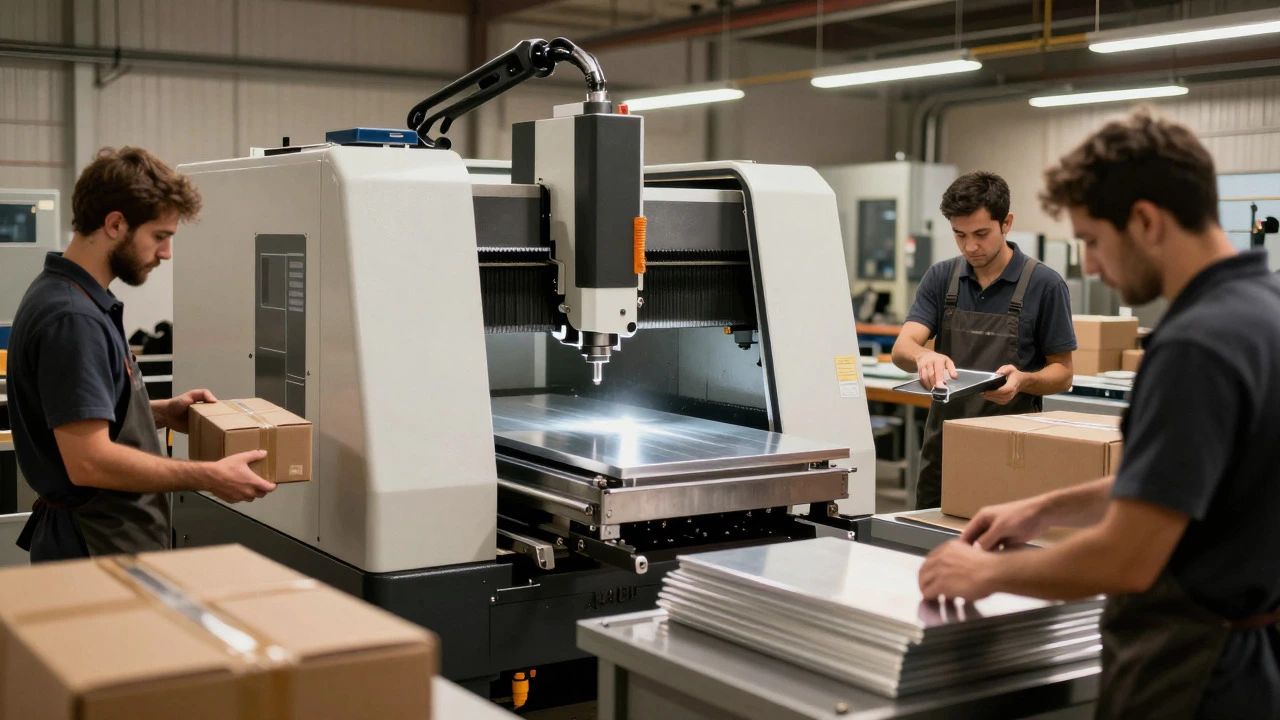
ResultYou walk into a garage in Bristol. It’s not empty. There’s a CNC machine humming, three people packing boxes, and a pile of raw aluminum waiting to be cut. Is this a factory? Technically, yes. But it’s not the sprawling industrial complex you see on highway signs. This is small scale manufacture. And if you’re thinking about starting your own production line, understanding exactly what this term means-and where its boundaries lie-is the first step before you buy a single tool.
The confusion often starts because "small" is relative. To a multinational corporation with ten thousand employees, a company with fifty workers is tiny. To a solo maker working out of a spare room, that same fifty-person shop is an empire. So, how do we define it? We look at capital investment, employee count, and output volume. These aren't just arbitrary numbers; they determine your tax breaks, your loan eligibility, and even who can legally bid for government contracts.
The Core Definition: What Makes Manufacturing "Small"?
At its heart, small scale manufacture refers to production operations that use limited capital resources and employ a smaller workforce compared to large-scale industries. The primary goal isn't mass market domination through economies of scale, but rather flexibility, niche specialization, or serving local markets. In many regulatory frameworks, specifically within the UK and EU contexts relevant to Bristol-based businesses, the distinction often hinges on turnover and headcount.
For instance, under European Commission recommendations (which heavily influence UK standards post-Brexit via retained law), a micro-enterprise has fewer than 10 employees and a turnover balance sheet total of no more than €2 million. A small enterprise has fewer than 50 employees and a turnover of no more than €10 million. While these figures are legal definitions for subsidies, they provide a practical baseline for what constitutes "small." If your operation fits within these brackets, you are operating at a small scale. You don’t need automated assembly lines stretching for miles. You need agility.
Key Characteristics That Separate It from Large Industry
It’s easy to think small scale is just "big factory minus money." It’s not. The operational DNA is fundamentally different. Large manufacturers rely on rigidity. They spend years designing a product, months setting up tooling, and then run that same part for five years. Change one screw, and you halt production for a week. Small scale manufacturers thrive on change. Here is what you will actually see on the floor:
- High Labor-to-Capital Ratio: You might have one expensive laser cutter, but you also have skilled technicians manually finishing edges. Automation is used where it saves time, not everywhere.
- Niche Product Focus: Instead of making every type of bolt in existence, you make custom aerospace fasteners or bespoke furniture joints. You solve specific problems.
- Shorter Lead Times: Because decision-making layers are thin, you can pivot from producing medical devices to consumer electronics housings in weeks, not quarters.
- Direct Customer Interaction: The person running the lathe might know the client’s name. Feedback loops are immediate.
This directness is your superpower. Big companies lose touch with individual customer pain points because they are too big to hear them. You are close enough to listen.
Regulatory Thresholds: When Does Size Matter?
Why care about the definition? Because it affects your wallet. Governments love small scale manufacturing. Why? Because it creates jobs in communities and keeps supply chains resilient. Consequently, there are specific thresholds that unlock benefits.
In the UK context, while the strict "SME" definition is broad, specific manufacturing grants often target facilities with less than £1 million in annual turnover or those employing under 250 staff. If you cross these lines, you might lose access to simplified VAT schemes or preferential business rates. Conversely, staying too small might disqualify you from certain export incentives that require a minimum production capacity.
| Metric | Micro Enterprise | Small Enterprise | Medium Enterprise |
|---|---|---|---|
| Employee Count | < 10 | < 50 | < 250 |
| Annual Turnover | ≤ €2 Million | ≤ €10 Million | ≤ €50 Million |
| Balance Sheet Total | ≤ €2 Million | ≤ €10 Million | ≤ €43 Million |
| Primary Advantage | Low overhead, extreme agility | Access to mid-tier grants, scalable teams | Bulk purchasing power, dedicated R&D |
Note: Figures reflect standard EU Recommendation 2003/361/EC criteria, widely adopted in UK policy discussions regarding SME support.
The Economics: Why Choose Small Scale Production?
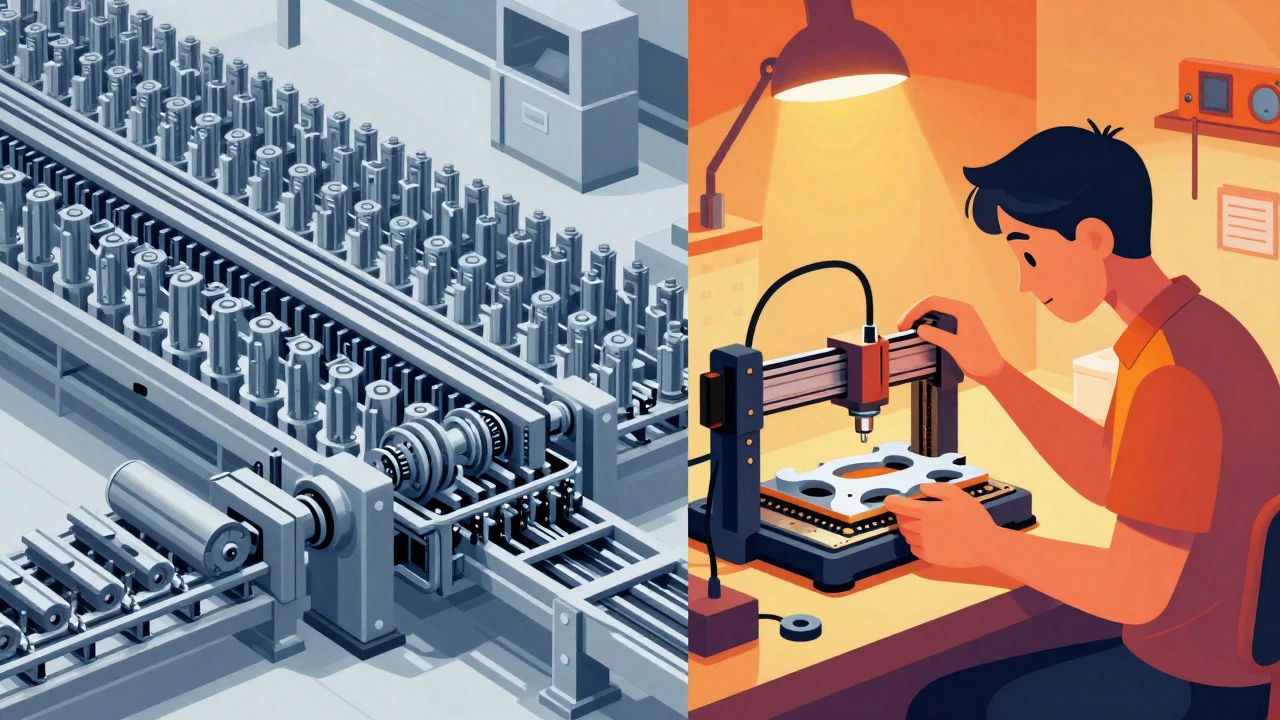
If you can build a massive factory, why wouldn’t you? Because capital is expensive, and demand is unpredictable. Small scale manufacturing offers a lower barrier to entry. You don’t need $50 million to start. You might need $50,000 for a decent 3D printing farm and some injection molding tools.
Consider the concept of Lean Manufacturing. Originally developed by Toyota, it’s arguably more effective in small settings. In a small shop, waste is obvious. If you’re overproducing, you see the piles of inventory blocking the aisle immediately. In a giant warehouse, excess stock hides until it becomes obsolete. Small scale forces efficiency simply because you lack the space to hide inefficiency.
Furthermore, customization commands higher margins. A large factory makes a generic smartphone case for $2 profit per unit, selling millions. A small workshop makes a leather-wrapped, monogrammed case for $20 profit per unit, selling thousands. You win on value, not volume.
Common Pitfalls of Growing Too Fast
Many entrepreneurs misunderstand the term. They think "small" means "unprofessional." It doesn’t. However, scaling incorrectly is the number one killer of small manufacturers. You get an order that doubles your output requirement. Do you hire ten people? Buy a bigger building? Or invest in automation?
If you hire too quickly, your labor costs skyrocket before your revenue stabilizes. If you buy too much machinery, you’re tied down by debt service. The sweet spot is incremental growth. Use contract manufacturing partners for overflow work instead of buying new machines. Rent flexible workspace instead of signing a ten-year lease. Keep your fixed costs low so you can survive a bad quarter without panic.
Another trap is ignoring quality control systems. Just because you’re small doesn’t mean you can skip ISO 9001 protocols. In fact, small manufacturers often fail audits because they rely on tribal knowledge-"ask Dave how he does it"-rather than documented processes. Document everything early. It’s cheaper to write a procedure now than to retrain staff later.

Real-World Examples: Who Are the Players?
To visualize this, let’s look at sectors where small scale thrives. Electronics prototyping is a prime example. Companies like JLCPCB (originally) started small, focusing on rapid PCB fabrication for hobbyists and startups before scaling up. Their initial model was pure small scale: quick turnaround, low minimum order quantities, high digital integration.
In the UK, look at craft breweries or boutique food processors. They don’t compete with Coca-Cola on volume. They compete on flavor and locality. Similarly, specialized metal fabrication shops in Manchester or Birmingham produce components for defense or aerospace that require tight tolerances but low volumes. Large factories refuse these orders because setup costs eat the profit. Small shops take them because their setup is faster and cheaper.
Even in textiles, small batch clothing brands use digital printing and localized sewing units to avoid the massive minimum orders required by overseas mega-factories. This allows them to test designs with real customers before committing to bulk production.
How to Start Your Small Scale Operation
If you’re ready to enter this space, here is your checklist:
- Define Your Niche: Don’t try to be a generalist. Pick a material (e.g., carbon fiber) or a process (e.g., laser cutting) and master it.
- Calculate Break-Even Accurately: Include hidden costs like machine maintenance, scrap rate, and electricity spikes. Small margins vanish quickly.
- Invest in Digital Tools: Use ERP software designed for SMEs, not enterprise giants. Look for platforms that handle quoting, inventory, and scheduling in one place.
- Build Local Supply Chains: Reduce lead times by sourcing materials locally where possible. It builds resilience against global shipping delays.
- Prioritize Quality Documentation: Create standard operating procedures (SOPs) from day one. This ensures consistency when you eventually hire help.
Remember, being small is a strategic choice, not a limitation. It allows you to serve markets that big players ignore. Whether you’re machining titanium parts for medical implants or crafting eco-friendly packaging, your size is your advantage if you manage it wisely.
Is home-based production considered small scale manufacturing?
Yes, provided it involves transforming raw materials into finished goods. However, local zoning laws may restrict commercial activity in residential areas. Many home-based makers operate under cottage industry regulations which have specific turnover caps and safety requirements distinct from formal factory licenses.
What is the difference between small scale and artisanal manufacturing?
Artisanal manufacturing focuses primarily on hand-craftsmanship and unique, non-reproducible items. Small scale manufacturing implies a degree of standardization and repeatability, often using semi-automated tools. An artisan makes one-of-a-kind chairs; a small scale manufacturer produces batches of identical ergonomic office chairs.
Can small scale manufacturers compete with overseas factories?
Not on price alone for simple commodities. They compete on speed, quality control, customization, and proximity. For urgent orders or high-value components requiring tight tolerances, local small scale manufacturers often beat overseas competitors due to reduced logistics costs and communication ease.
Do I need ISO certification for small scale manufacturing?
It depends on your clients. Industries like automotive, aerospace, and medical devices usually require ISO 9001 or AS9100 certifications regardless of size. For consumer goods, it’s optional but highly recommended to build trust and streamline internal processes.
How does automation fit into small scale manufacturing?
Automation in small scale settings is typically collaborative (cobots) or task-specific (automated feeding). It aims to reduce repetitive strain and increase precision rather than replace all human labor. The ROI must justify the cost, so selective automation is key.