Unit Process vs. Unit Operation Identifier
You walk into a supermarket, grab a carton of milk, and head to the checkout. You likely don’t think about the massive steel tanks, the precise temperature controls, or the chemical reactions that turned raw cow’s milk into that safe, shelf-stable product. But behind every packaged food item lies a series of specific operations known as unit processes. Unlike simple mechanical steps like cutting or mixing, these are fundamental physical or chemical transformations that change the nature of the material itself.
If you’ve ever wondered what exactly happens inside a factory when raw ingredients become finished goods, understanding unit processes is the key. It’s not just about moving stuff around; it’s about changing stuff. Let’s break down what this actually means, using real-world examples from the food industry that you encounter daily.
Defining the Core Concept: Process vs. Operation
Before we jump into examples, we need to clear up a common confusion. In engineering and manufacturing, people often use "unit operation" and "unit process" interchangeably, but they aren’t the same thing. Think of it this way: a unit operation is a physical step, like grinding wheat into flour or pumping water through a pipe. The substance doesn’t fundamentally change its chemical identity during these steps.
A unit process, however, involves a chemical or biochemical reaction. The starting material transforms into something new with different properties. When you bake bread, the yeast ferments sugars (a unit process) while the dough rises and sets in the oven (involving both physical and chemical changes). In food processing, distinguishing between these helps engineers design better systems for safety, taste, and efficiency.
Why does this distinction matter? Because unit processes often require strict control over variables like pH, temperature, and time. If you mess up a physical operation, you might get uneven cuts. If you mess up a chemical unit process, you might get spoiled food or unsafe products.
The Classic Example: Pasteurization
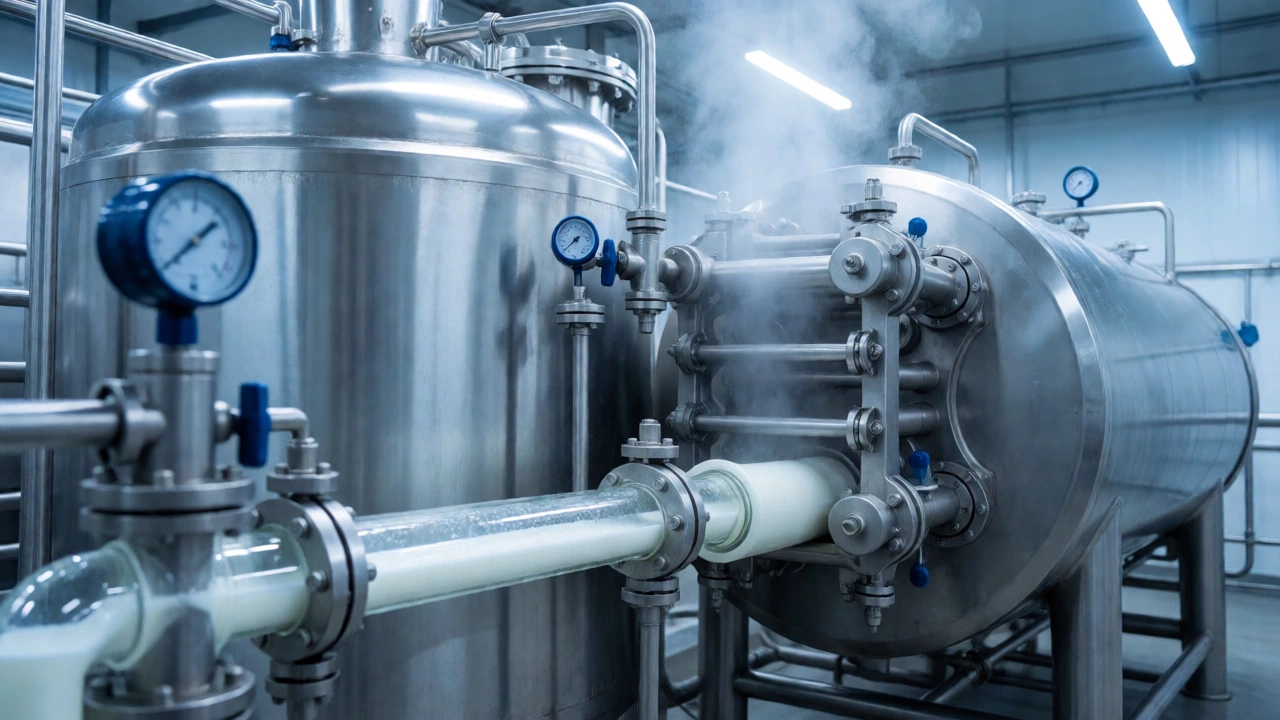
When someone asks, "What is an example of a unit process?", pasteurization is arguably the most recognizable answer in the food sector. This isn't just heating milk; it's a controlled thermal treatment designed to kill pathogenic microorganisms without significantly altering the nutritional value or taste of the product.
Here is how it works as a unit process:
- Input: Raw milk containing harmful bacteria like Salmonella or E. coli.
- Process: Heating the liquid to a specific temperature (e.g., 72°C for 15 seconds) and then rapidly cooling it.
- Output: Milk with a significantly reduced microbial load and extended shelf life.
This fits the definition perfectly because the heat causes protein denaturation and kills cells, which are irreversible biological and physical-chemical changes. You can’t "un-pasteurize" milk. The state of the product has been fundamentally altered by energy input.
Fermentation: The Biological Powerhouse
If pasteurization uses heat, fermentation uses biology. This is another prime example of a unit process, widely used in making yogurt, cheese, beer, wine, and sauerkraut. Here, microorganisms like bacteria or yeast consume sugars and produce acids, gases, or alcohol.
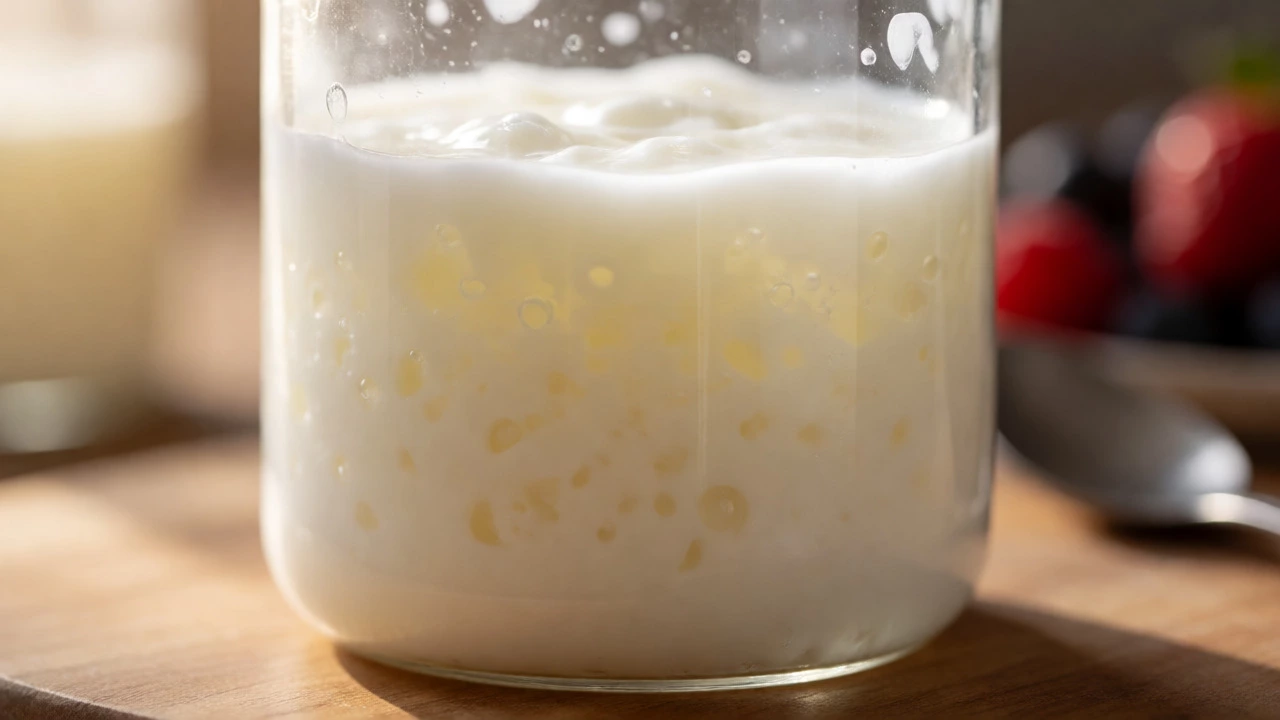
Consider yogurt production. You start with milk and add specific bacterial cultures (Lactobacillus bulgaricus and Streptococcus thermophilus). Over several hours at a warm temperature, these bacteria convert lactose (milk sugar) into lactic acid. This acid lowers the pH, causing milk proteins to coagulate and thicken. The result is a product with a tangy taste and thicker texture. The milk didn’t just get mixed; it was chemically transformed by living agents. That’s a unit process in action.
Evaporation and Drying: Removing Water Efficiently
Water removal is critical in food preservation. While drying can sometimes be seen as a physical separation, industrial evaporation often involves complex heat transfer mechanisms that classify it closely with unit processes due to the phase change involved.
In producing condensed milk or fruit concentrates, manufacturers remove large volumes of water to reduce weight and prevent spoilage. This isn’t just air-drying fruit slices on a rack. Industrial evaporators boil the liquid under vacuum to lower the boiling point, preserving delicate flavors and nutrients. The transition from liquid to vapor requires significant energy input and results in a concentrated syrup. This phase change and concentration effect represent a fundamental alteration of the material’s physical state and composition.
Extraction: Pulling Out What Matters
Another solid example is extraction. Whether you’re making coffee, olive oil, or essential oils, extraction involves separating a desired component from a solid matrix using a solvent or mechanical force.
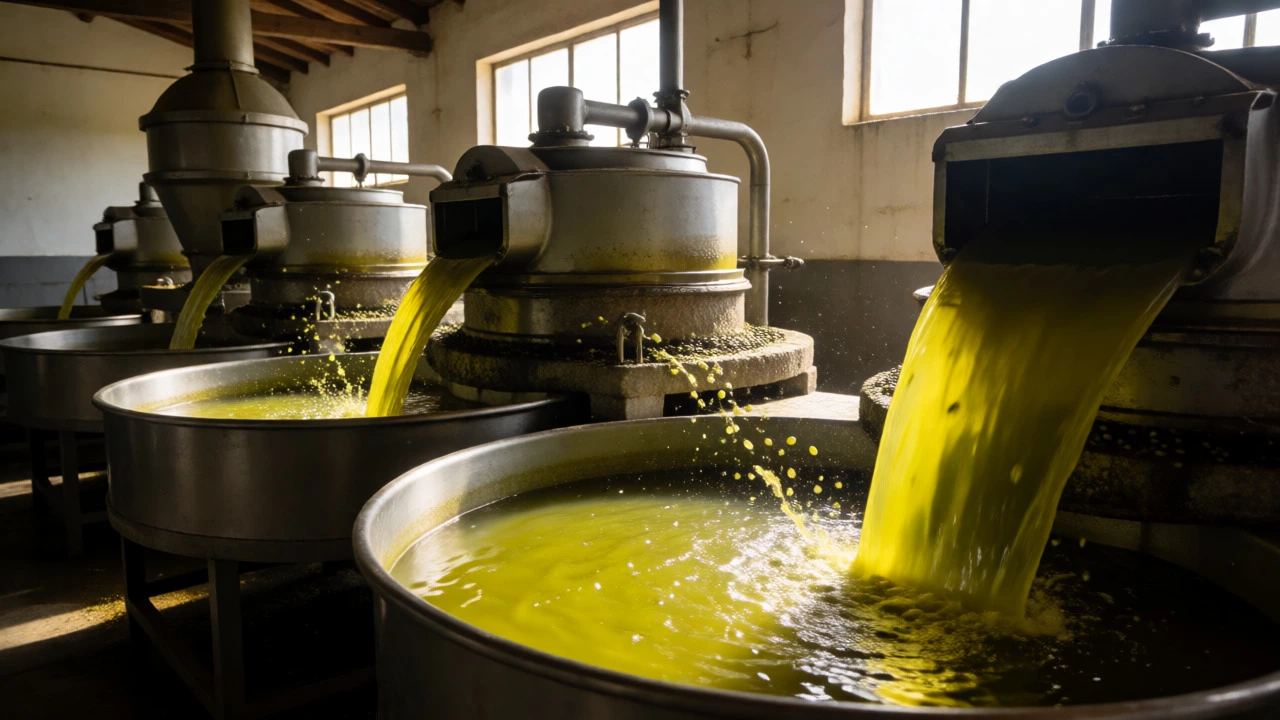
Take cold-pressed olive oil. Olives are crushed, and the oil is separated from the water and solids. While pressing is mechanical, the subsequent separation of oil droplets from water emulsions often relies on centrifugation and sometimes enzymatic treatments to break down cell walls. In solvent extraction, such as obtaining soybean oil, hexane is used to dissolve the oil out of the bean flakes. The solvent is then distilled off, leaving pure oil. This separation based on solubility differences is a classic unit process technique used across chemical and food industries.
How Unit Processes Differ from Unit Operations
To help you visualize the difference, let’s look at a comparison table. This breakdown highlights why certain steps are classified as processes rather than operations.
| Feature | Unit Operation | Unit Process |
|---|---|---|
| Nature of Change | Physical only | Chemical or Biochemical |
| Reversibility | Often reversible (e.g., melting/freezing) | Generally irreversible |
| Control Variables | Flow rate, pressure, size reduction | Temperature, pH, catalyst, time, reactants |
| Example | Mixing flour and water | Baking bread (Maillard reaction) |
| Primary Goal | Shape, size, or location change | Composition or property change |
Notice how baking bread appears in the process column. Mixing the ingredients is an operation. Baking them triggers the Maillard reaction, where amino acids and reducing sugars create brown crusts and complex flavors. That chemical reaction is the unit process.
Why Understanding These Examples Helps Your Business
If you run a small-scale food startup or work in manufacturing, grasping these concepts isn’t just academic. It affects your equipment choices and quality control. For instance, if your product relies on fermentation, you need tanks with precise temperature jackets and pH sensors. You can’t just buy a mixer and hope for the best.
Furthermore, identifying unit processes helps in troubleshooting. If your jam isn’t setting correctly, the issue likely lies in the pectin gelation process (a physicochemical interaction) rather than the bottling operation. By isolating the specific unit process failing, you save time and money.
It also aids in scaling up. A recipe tested in a kitchen pot behaves differently in a 10,000-liter tank. Heat transfer rates, mixing efficiency, and reaction kinetics change. Knowing which steps are sensitive unit processes allows you to engineer solutions early, avoiding costly mistakes during mass production.
Other Common Unit Processes in Food Industry
Beyond the big names like pasteurization and fermentation, several other unit processes operate quietly in factories:
- Curing: Used in meats like ham or bacon. Salt, nitrites, and smoke trigger chemical reactions that preserve meat and develop flavor.
- Hydrogenation: Turning vegetable oils into semi-solids like margarine by adding hydrogen atoms to double bonds in fatty acids.
- Enzymatic Hydrolysis: Breaking down starches into sugars using enzymes, crucial in corn syrup production.
- Sterilization: Similar to pasteurization but more intense, often used for canned goods to achieve commercial sterility.
Each of these involves altering the molecular structure of the food components, confirming their status as unit processes.
Is mixing considered a unit process?
No, mixing is typically classified as a unit operation. It involves physical dispersion of materials without changing their chemical composition. However, if mixing facilitates a chemical reaction, the reaction itself is the unit process, while the mixing supports it.
What is the difference between sterilization and pasteurization?
Both are thermal unit processes, but they differ in intensity. Pasteurization uses lower temperatures to kill pathogens and extend shelf life briefly. Sterilization uses higher temperatures (often above 100°C under pressure) to destroy all microorganisms, including spores, allowing for long-term ambient storage.
Can drying be a unit process?
Simple drying is often a unit operation involving heat and mass transfer. However, if the drying process induces chemical changes, such as case hardening or non-enzymatic browning, aspects of it may overlap with unit process characteristics. Generally, it is treated as a separation operation.
Why is fermentation important in food processing?
Fermentation is a vital unit process because it enhances flavor, improves digestibility, increases nutrient availability, and acts as a natural preservative by lowering pH. It transforms raw ingredients into culturally significant foods like cheese, yogurt, and bread.
How do I identify a unit process in my factory?
Ask yourself: Does the material’s chemical identity change? Is there a new compound formed? Is the change irreversible? If yes, you have identified a unit process. If the material just changes shape, size, or location, it is likely a unit operation.