Manufacturing SME Size Calculator
SME Classification Calculator
Determine if a manufacturing business qualifies as a Small and Medium Enterprise (SME) based on employee count and annual turnover. This calculator uses UK and EU standards.
When you hear the term SME in manufacturing, it doesn’t mean a fancy piece of machinery or a new tech trend. It stands for Small and Medium-sized Enterprise. In manufacturing, an SME is any company that makes physical products but doesn’t have the size or budget of a giant like Ford or Siemens. These are the local workshops, family-run factories, and niche producers that keep regional economies alive.
What Counts as a SME in Manufacturing?
The exact size of a manufacturing SME varies by country, but in the UK and EU, the standard is clear:
- Micro-enterprises: Fewer than 10 employees, under €2 million in annual turnover
- Small enterprises: 10 to 49 employees, under €10 million turnover
- Medium enterprises: 50 to 249 employees, under €50 million turnover
Anything above 250 employees? That’s no longer an SME-it’s a large manufacturer. In the UK alone, SMEs make up 99.9% of all manufacturing businesses. But they only account for about 30% of total manufacturing output. Why? Because they’re often focused on quality, customization, or local supply chains rather than mass production.
Why SMEs Matter in Manufacturing
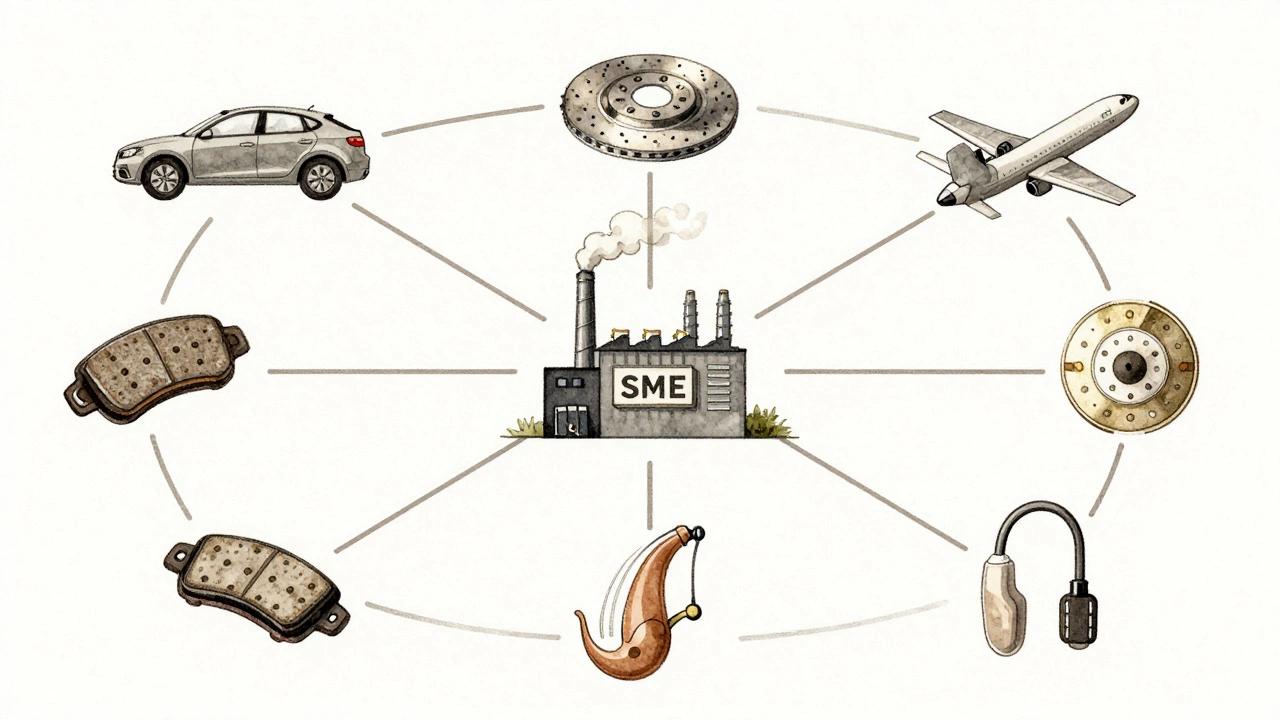
Think about your car. The brake pads? Probably made by a 40-person shop in Derby. The custom aluminum brackets for your bike rack? Likely forged by a two-person team in Sheffield. These aren’t footnotes-they’re essential links in the supply chain.
Large manufacturers rely on SMEs for parts they can’t or won’t make themselves. A carmaker might design a new engine, but it outsources the gaskets, sensors, and exhaust mounts to SMEs. Why? Because SMEs are faster, more flexible, and cheaper to work with on small batches. They don’t need to justify every decision to a board. They just need to deliver on time.
In the UK, over 6,000 manufacturing SMEs supply directly to aerospace, automotive, and medical device companies. Many of them have been operating for 30, 40, even 60 years. They’re not flashy. But they’re reliable.
How SMEs in Manufacturing Operate Differently
Big factories run on automation, robotics, and global logistics. SMEs run on relationships, adaptability, and grit.
- Custom orders: A large plant might only produce 10,000 identical parts per week. An SME might make 50 different versions in the same week, each tweaked for a specific client.
- Short lead times: Need 200 custom metal housings by Friday? A big company might say ‘next quarter.’ An SME says ‘we’ll have them ready by 3 PM.’
- Hands-on problem solving: If a machine breaks, the owner might fix it themselves. No waiting for a service engineer from another country.
- Local sourcing: Many SMEs buy steel, plastic, or electronics from nearby suppliers to cut costs and reduce delays.
They don’t have ERP systems or AI-driven inventory tools. Many still use Excel sheets and handwritten work orders. But that doesn’t make them outdated-it makes them agile.
Common Types of SMEs in Manufacturing
Not all SMEs are the same. Here are the most common types you’ll find across the UK:
- Contract manufacturers: Make products to order for other brands. Think of them as the hidden builders behind private-label goods.
- Tool and die shops: Build molds, jigs, and fixtures used in larger factories. Often the unsung heroes of precision manufacturing.
- Specialist fabricators: Work with metals, plastics, or composites for niche industries like medical devices or robotics.
- Assembly specialists: Take pre-made parts and put them together-like wiring control panels or assembling medical equipment.
- Prototyping studios: Turn ideas into working models. Often the first stop for startups before scaling up.
Each type plays a unique role. One might be making parts for a wind turbine. Another might be assembling hearing aids. They’re all SMEs. They’re all vital.
Challenges Facing Manufacturing SMEs
Being small has advantages-but it also comes with real struggles.
- Cash flow: Waiting 60-90 days for payment from big clients can cripple a small business with no reserve funds.
- Access to finance: Banks often see SMEs as risky. Getting a loan for new machinery can take months-or fail entirely.
- Skill shortages: Finding skilled welders, CNC operators, or quality inspectors is harder than ever. Many apprenticeships have disappeared.
- Regulatory pressure: Compliance with safety, environmental, and product standards is expensive and complex. A 15-person shop can’t afford a full-time compliance officer.
- Technology gaps: Industry 4.0 tools like IoT sensors or predictive maintenance are out of reach for many SMEs. They can’t afford the upfront cost.
These aren’t hypothetical problems. In 2024, a survey by the UK’s Manufacturing Technologies Association found that 41% of SMEs had delayed equipment upgrades due to funding issues. Another 33% said they’d lost contracts because they couldn’t meet new certification requirements.
How SMEs Are Adapting
Despite the hurdles, many SMEs are finding ways to survive-and even thrive.
- Collaboration: Groups of 5-10 SMEs now share testing labs, training programs, and even warehouse space to cut costs.
- Government grants: The UK’s Manufacturing Growth Programme offers free advice and up to £10,000 in grants for tech upgrades.
- Specialization: Instead of trying to do everything, SMEs are doubling down on one thing they do exceptionally well-like laser cutting stainless steel or assembling medical sensors.
- Online presence: More SMEs are using LinkedIn and industry directories to find buyers. No more waiting for sales reps to call.
- Hybrid models: Some SMEs now offer both manufacturing and design services. They’re not just making parts-they’re solving problems.
One Bristol-based SME, MicroTech Components, went from 8 employees to 27 in three years by focusing only on custom parts for the NHS. They didn’t chase big contracts. They became the go-to shop for low-volume, high-precision medical housings. Now they’re on the waiting list for new CNC machines.
How to Tell If a Company Is a True SME
Not every small shop is an SME. Here’s how to spot the real ones:
- They have fewer than 250 employees
- They’re not owned by a larger corporation
- They make tangible products-not software or services
- They’re locally rooted, even if they ship nationally or globally
- They rely on skilled manual labor, not just automation
If a company has more than 250 people, or if it’s a subsidiary of a multinational, it’s not an SME-even if it’s small by global standards.
What’s Next for SMEs in Manufacturing?
The future isn’t about becoming big. It’s about becoming smarter and more connected.
Government programs are slowly improving access to low-cost tech. Shared digital platforms now let SMEs bid for contracts alongside big firms. Universities are launching short courses for CNC programming and lean manufacturing-designed for busy shop owners.
But the biggest shift? Mindset. More SME owners are realizing they don’t need to compete with giants. They need to outmaneuver them. Speed. Precision. Reliability. These are their superpowers.
If you’re a buyer, don’t overlook SMEs. They’re often the best choice for custom work, quick turnaround, and long-term partnership. If you’re an SME owner, don’t wait for a big break. Start small. Build trust. Focus on one thing you do better than anyone else.
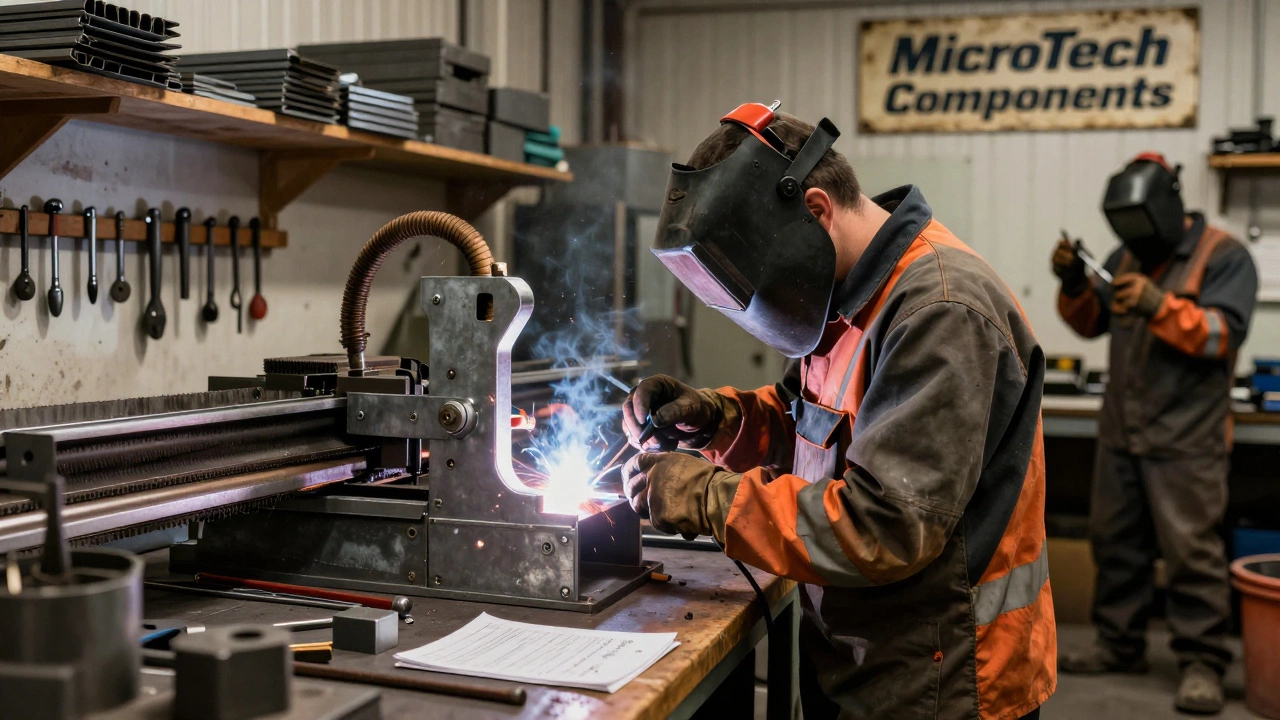
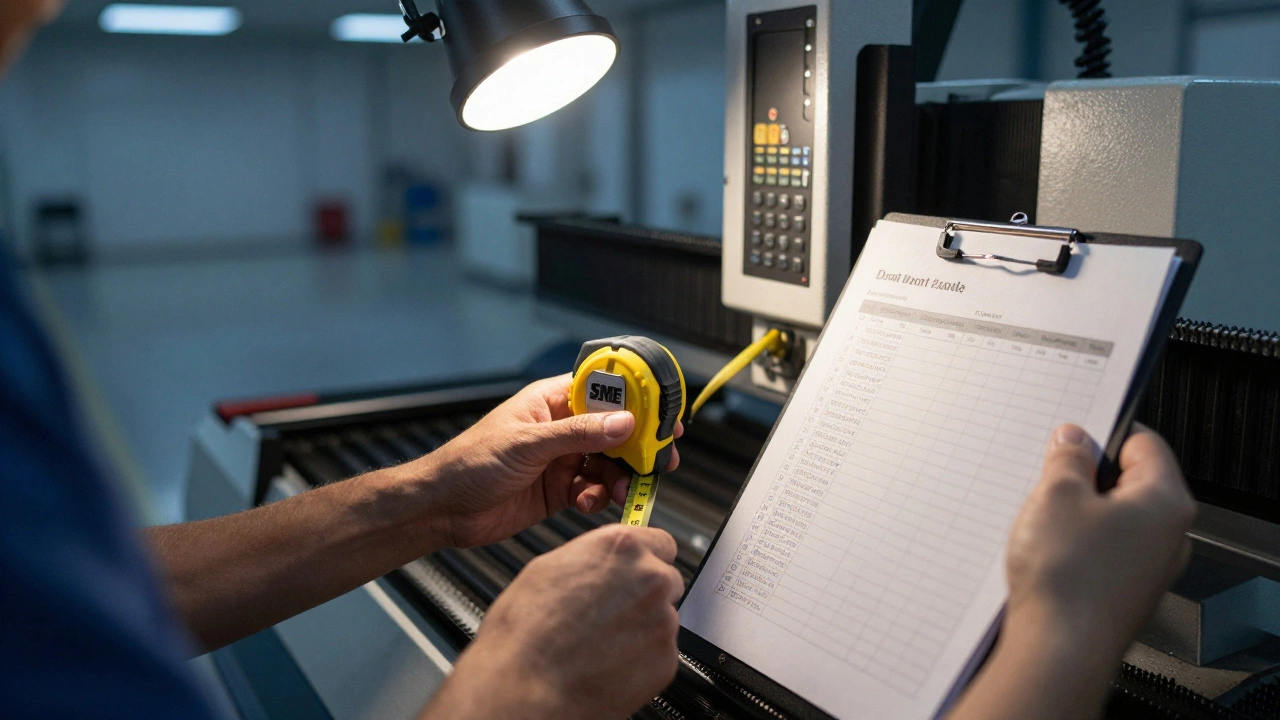
Manufacturing isn’t just about scale. It’s about skill. And in the UK, that skill still lives in small factories-with a welder’s helmet on, a measuring tape in hand, and a job to finish before the end of the day.
Is a SME the same as a small business?
Almost, but not exactly. All SMEs are small businesses, but not all small businesses are SMEs. A bakery or a hair salon is a small business, but not a manufacturing SME. SME in manufacturing specifically refers to companies that produce physical goods, with defined employee and turnover limits. The term is used in policy, funding, and trade contexts, not just as a general label.
Do SMEs in manufacturing use automation?
Yes, but selectively. Many SMEs use CNC machines, laser cutters, or automated assembly lines for repetitive tasks. But they rarely invest in full factory robotics. Instead, they pick one or two key machines that boost output without breaking the bank. A small shop might have one CNC mill and a manual lathe-just enough to handle custom orders efficiently.
Can an SME become a large manufacturer?
Absolutely. Many large manufacturers started as SMEs. The difference is growth. If a company hits 250+ employees and exceeds €50 million in turnover, it officially leaves the SME category. But many choose to stay small on purpose-because they value flexibility, culture, and control over scale.
How do SMEs compete with cheap imports?
They don’t try to compete on price. Instead, they compete on speed, quality, and customization. A factory in China might make 10,000 identical parts for $1 each. An SME might make 50 custom parts for £20 each-but deliver them in 48 hours with full traceability and technical support. Buyers choose SMEs when they need reliability, not just low cost.
Are there government grants for SME manufacturers in the UK?
Yes. The UK government offers several programs, including the Manufacturing Growth Programme, the Advanced Manufacturing Supply Chain Initiative, and regional growth funds. These often cover up to 30-50% of the cost for new equipment, training, or energy efficiency upgrades. Many are free to apply for and come with expert support.
Final Thoughts
Don’t let the word ‘small’ fool you. SMEs in manufacturing are the backbone of the UK’s industrial base. They don’t make headlines. But they make the parts that keep cars running, hospitals equipped, and machines working. They’re not waiting for the future-they’re building it, one custom part at a time.