Manufacturing Sector Comparison Tool
Compare the top manufacturing sectors expected to boom in 2025. Select which sectors you want to compare to see a detailed analysis of growth potential, startup costs, and investment requirements.
Select sectors to compare:
Comparison Results
| Comparison Metric | Sector 1 | Sector 2 | Sector 3 |
|---|---|---|---|
| Growth Rate | |||
| Startup Cost | |||
| Key Skills Needed | |||
| Market Size | |||
| Investment Potential |
Business Recommendation
Select sectors to see personalized business recommendations based on your goals.
By mid-2025, the manufacturing landscape has shifted in ways most analysts didn’t predict just two years ago. It’s not about cheaper labor or bigger factories anymore. The real winners are the industries that fused automation, sustainability, and localized supply chains into something customers actually want to buy. If you’re looking to start or scale a manufacturing business in 2025, you need to know where the money and demand are flowing - and where they’re not.
Advanced Battery Manufacturing Is the New Oil
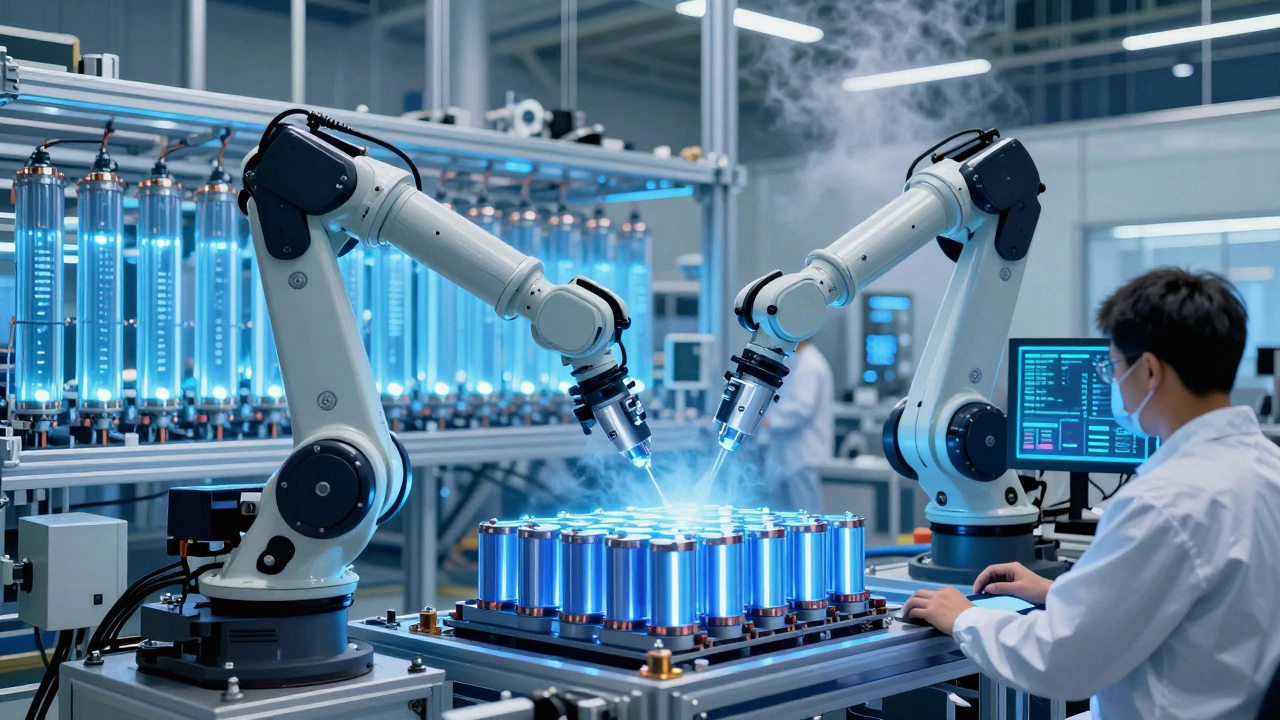
Electric vehicles got the headlines, but the real boom is in the factories making the batteries that power them. Lithium-ion production is still growing, but the real game-changer is solid-state batteries. Companies like QuantumScape and Toyota have moved from lab prototypes to pilot production lines. By 2025, solid-state batteries are being used in premium EVs, drones, and even medical implants because they charge faster, last longer, and don’t catch fire.
China still leads in raw material processing, but the U.S. and EU are investing billions into domestic battery gigafactories. The Inflation Reduction Act in the U.S. alone has triggered over $40 billion in private investment in battery manufacturing since 2023. Factories in Ohio, Georgia, and Michigan are now hiring welders, chemists, and robotics technicians at record rates. This isn’t just about cars - it’s about energy storage for homes, farms, and remote telecom towers.
Biomanufacturing Is Turning Labs Into Factories
Forget traditional pharma. The fastest-growing manufacturing sector in 2025 isn’t making pills - it’s making proteins, enzymes, and even synthetic meat in bioreactors. Companies like Ginkgo Bioworks and Impossible Foods are using engineered microbes to produce ingredients that used to come from animals or plants. A single fermentation tank can now produce the same amount of milk protein as 100 cows - without the land, water, or methane.
Regulators in the U.S., EU, and Singapore have cleared over 40 bioengineered food and cosmetic ingredients for commercial sale. The cost to build a biomanufacturing facility dropped 60% since 2020 thanks to modular, plug-and-play bioreactor systems. A small startup in Iowa can now produce lab-grown collagen for skincare with a $2 million investment - a fraction of what it cost five years ago.
This isn’t science fiction. You can buy bioengineered vanilla extract in your local grocery store. By 2025, 12% of all flavorings and fragrances are made this way. The demand for sustainable, cruelty-free, and allergen-free ingredients is pushing this sector past $150 billion in global revenue.
Smart Packaging Is No Longer Optional
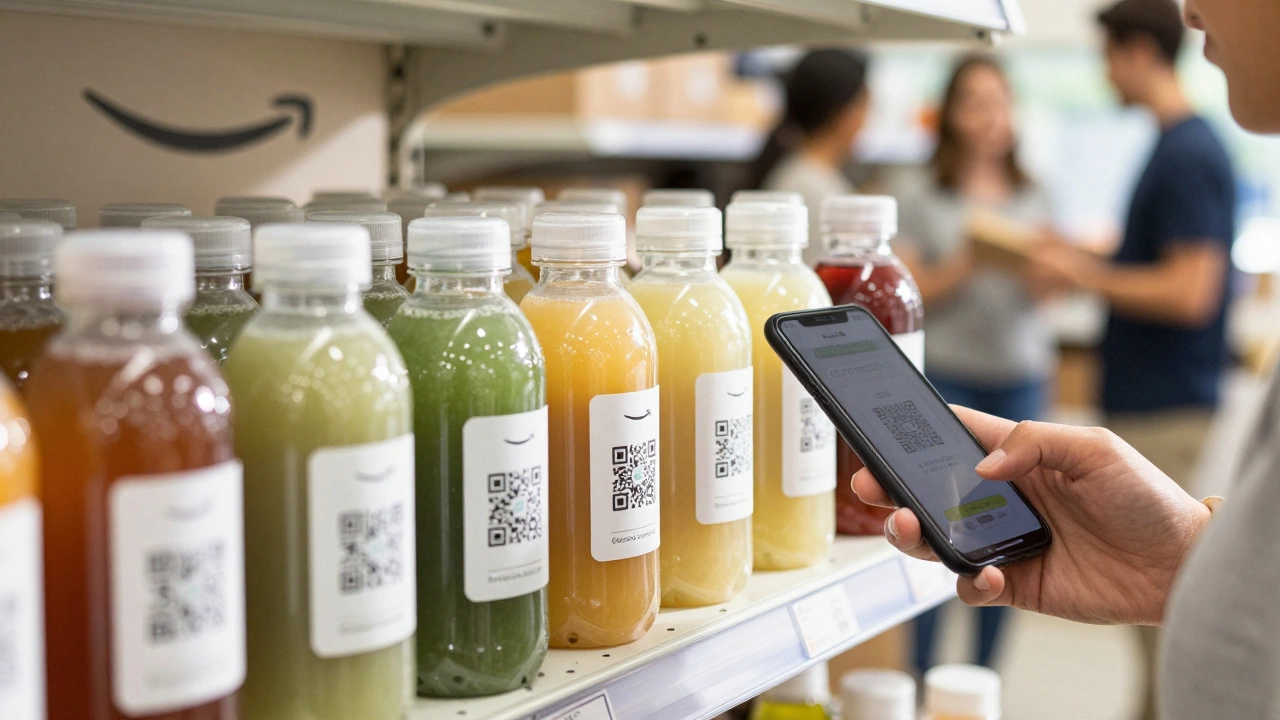
Plastic bottles and cardboard boxes are being replaced by active, intelligent packaging. In 2025, packaging isn’t just a container - it’s a sensor. Companies like Amcor and Tetra Pak are now manufacturing bottles that change color if food is spoiled, labels that track freshness via QR codes linked to blockchain, and compostable films embedded with antimicrobial nanoparticles.
Amazon and Walmart now require all private-label suppliers to use smart packaging for perishables. The EU’s Single-Use Plastics Directive forced brands to switch, and consumers are voting with their wallets. A 2025 Nielsen study showed that 68% of shoppers will pay up to 15% more for products in packaging that reduces waste or alerts them to spoilage.
Manufacturers who stuck with plain plastic are seeing their margins shrink. Those who invested in smart packaging tech are seeing 30% higher customer retention and 20% lower return rates. The technology isn’t expensive anymore - injection molding machines that print embedded sensors cost under $50,000. It’s a low-barrier entry point for small manufacturers with niche products.

Modular Construction Components Are Reshaping Infrastructure
There’s a housing crisis in the U.S., Europe, and parts of Asia. The solution? Factories making standardized, high-quality building modules. Companies like Katerra and ICON are producing entire walls, bathrooms, and roof systems in climate-controlled plants, then shipping them to job sites for assembly in days instead of months.
These modules use cross-laminated timber, recycled steel, and integrated insulation - all made with precision robotics. The result? Homes built 50% faster, 30% cheaper, and with 70% less waste. Local governments in California, Germany, and Canada are now offering tax breaks to builders who use factory-made components.
It’s not just housing. Schools, clinics, and emergency shelters are being built the same way. A single modular factory in Tennessee now produces 1,200 units a year - enough to build a small town. The supply chain is local, the labor is skilled but not scarce, and the demand is exploding. This isn’t a niche trend - it’s the future of construction.
Green Hydrogen Equipment Is the Hidden Winner
Hydrogen fuel cells got a lot of hype, but the real manufacturing opportunity is in the equipment that makes green hydrogen - not the fuel itself. Electrolyzers, which split water into hydrogen and oxygen using renewable electricity, are now being mass-produced in factories across Germany, Canada, and Australia.
Unlike fuel cells, which require expensive platinum catalysts, new alkaline and PEM electrolyzers use nickel and stainless steel - materials that are abundant and cheap. The cost per kilowatt of electrolyzer capacity has dropped from $1,200 in 2020 to under $400 in 2025. That’s made it viable for fertilizer plants, steel mills, and even remote mining operations to switch from diesel to hydrogen.
China still dominates the market, but the U.S. Department of Energy’s Hydrogen Shot initiative has spurred 17 new electrolyzer factories since 2023. One company in Wisconsin now ships 500 units a month to farms in Iowa that use hydrogen to power irrigation pumps. This isn’t a futuristic dream - it’s a $12 billion industry growing at 40% annually.
What’s Not Booming (And Why)
Not every manufacturing sector is thriving. Traditional plastic injection molding for single-use items is shrinking fast. The EU’s ban on microplastics and U.S. state-level plastic taxes have crushed demand. Factories that didn’t pivot to bioplastics or reusable designs are shutting down.
Low-cost electronics assembly in Southeast Asia is also losing ground. Rising wages in Vietnam and Thailand, combined with U.S. and EU tariffs on components made without local content, have pushed companies to reshore. Apple now sources 30% of its iPhone components from U.S. and Mexican factories - up from 8% in 2022.
Steel manufacturing is stable, but it’s not booming. Unless you’re making high-strength, low-carbon steel for wind turbines or EV chassis, you’re stuck in a price war with Chinese mills. The real growth is in specialty alloys - not bulk steel.
Where to Start in 2025
If you’re thinking about launching a manufacturing business, here’s what actually works in 2025:
- Start small with a niche in smart packaging or biomanufacturing - low capital, fast ROI.
- Partner with a local university or innovation hub for R&D access - many offer free lab time for startups.
- Use modular equipment - don’t buy a $5 million machine. Rent or lease what you need until demand proves out.
- Focus on one market first - don’t try to sell globally from day one. A single state or country is enough to test.
- Build sustainability into your brand from the start - it’s not a marketing add-on anymore, it’s a requirement.
The old model - find cheap labor, make cheap stuff, ship it far - is dead. The new model is: make something smart, make it local, make it sustainable, and make it measurable. The factories that win in 2025 aren’t the biggest. They’re the most adaptable.
What manufacturing industry is expected to grow the most in 2025?
Advanced battery manufacturing, especially solid-state batteries, is growing the fastest. Biomanufacturing for food and cosmetics is also expanding rapidly. Both sectors are driven by demand for cleaner energy, sustainable materials, and locally produced goods. Smart packaging and green hydrogen equipment are close behind.
Is it too late to start a manufacturing business in 2025?
No - but you need to start differently. The days of opening a factory to make cheap plastic toys or basic metal parts are over. The opportunity now is in high-value, tech-integrated niches like biomanufacturing, smart packaging, or modular construction components. You don’t need millions - you need the right idea, the right tech, and a clear local market.
What’s the cheapest manufacturing business to start in 2025?
Smart packaging for small brands is one of the most affordable. You can start with a $50,000 injection molding machine that prints embedded QR codes or color-changing inks. Many startups begin by packaging niche products like organic teas, CBD oils, or artisanal soaps. The key is targeting customers who care about sustainability and transparency - they’ll pay more for better packaging.
Why is biomanufacturing booming now?
Three reasons: technology got cheaper, regulations changed, and consumers demanded it. Fermentation and cell-culture tech that once cost millions now runs on off-the-shelf bioreactors. Governments approved dozens of bioengineered ingredients for food and cosmetics. And shoppers are avoiding animal-based products and synthetic chemicals. The market responded - fast.
Should I invest in traditional manufacturing like steel or plastic?
Only if you’re pivoting. Traditional steel and plastic manufacturing are mature, low-margin industries. Unless you’re making specialty alloys for aerospace or biodegradable plastics, you’ll struggle to compete with China’s scale and low costs. The real returns are in upgrading these industries - like making low-carbon steel or plant-based plastics - not in repeating the old model.