Local vs. Global Manufacturing Cost Calculator
Enter Your Production Data
Cost Comparison Results
Enter your production data to see how local manufacturing compares to global offshoring when factoring in hidden costs.
For a long time, the global economy ran on a simple promise: move your factory to wherever labor is cheapest, and profits will follow. It worked for decades. But if you have been watching the news since 2020, you know that model cracked under pressure. When borders closed and ships sat idle in ports, businesses realized they had outsourced their survival. Now, there is a massive shift back toward local manufacturing. But what exactly was so great about it in the first place? And why are governments worldwide pouring billions into bringing factories home?
It isn't just nostalgia or patriotism. The return to local production is driven by hard economics, security needs, and technological changes that make making things close to home smarter than ever before.
The Hidden Cost of Global Shipping
We need to talk about the fragility of long-distance supply chains. For years, companies optimized for efficiency above all else. If a part could be made for $1 in Asia instead of $5 locally, they shipped it across the ocean. This created lean, mean cost-cutting machines. But it also created massive single points of failure.
When a pandemic hits, or a geopolitical conflict blocks a shipping lane, those lean chains snap. You cannot negotiate with a blocked port. You cannot speed up a ship that is stuck in a queue of hundreds of vessels. Local manufacturing solves this by shrinking the distance between raw materials and finished goods. When you produce within your own region, you cut out weeks of transit time. You reduce exposure to international tariffs, currency fluctuations, and global disruptions.
Consider the automotive industry. Before the recent chip shortages, carmakers sourced microchips from multiple continents. When demand spiked and supply dipped, entire assembly lines shut down because they lacked tiny silicon components. Companies that kept some semiconductor fabrication closer to their assembly plants fared better. They could react faster, adjust production runs, and keep trucks rolling while competitors waited months for shipments.
| Factor | Global Offshoring | Local Manufacturing |
|---|---|---|
| Lead Time | Weeks to Months | Days to Weeks |
| Supply Chain Risk | High (Geopolitical, Pandemic) | Low (Regional Stability) |
| Labor Cost | Lower | Higher |
| Innovation Speed | Slower (Communication Gaps) | Faster (Proximity to R&D) |
| Carbon Footprint | High (Shipping Emissions) | Lower (Reduced Transport) |
Jobs That Cannot Be Automated Away
One of the biggest arguments against local manufacturing has always been cost. Labor in developed nations like the UK, US, or Germany is expensive. Critics say we should let robots do the work, or just buy from countries where wages are lower. There is truth to that, but it misses the bigger picture of the modern workforce.
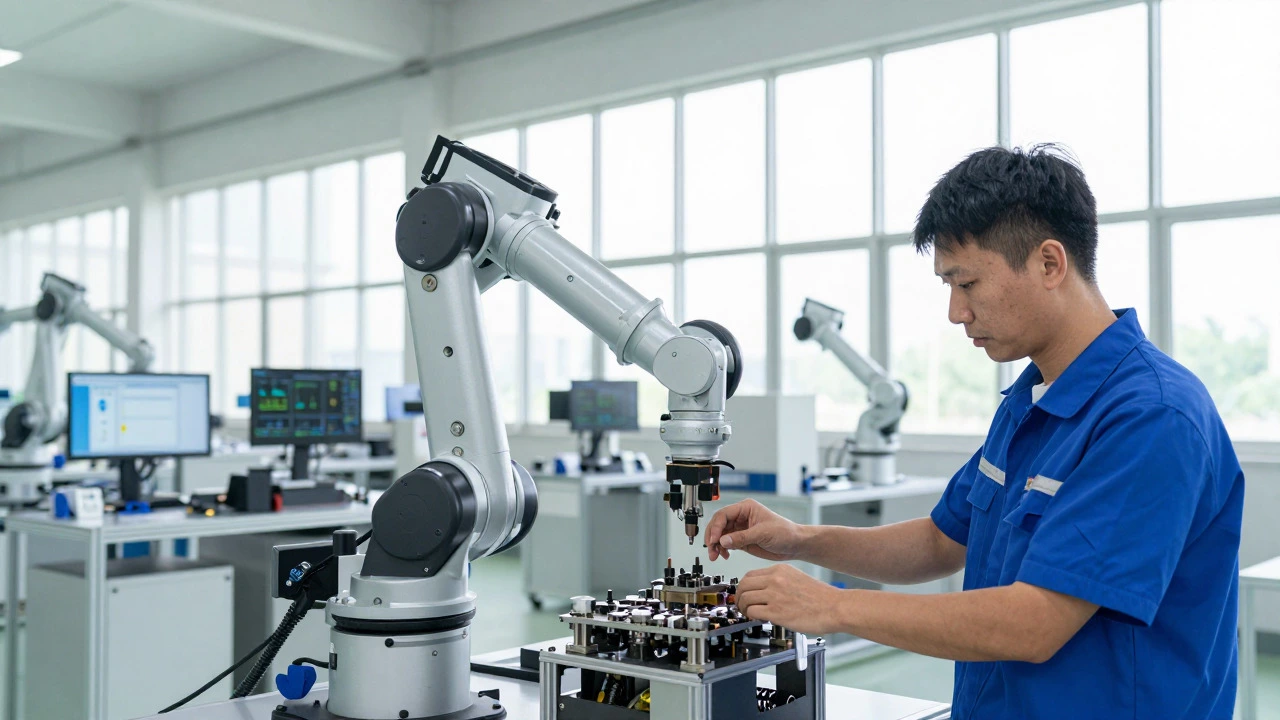
Modern factories are not the sweatshops of the past. They are high-tech hubs requiring skilled technicians, engineers, data analysts, and logistics experts. These are jobs that pay well and offer career stability. When you bring manufacturing back, you don't just create entry-level positions; you build an ecosystem of expertise. This includes maintenance for advanced robotics, quality control using AI vision systems, and supply chain management.
Moreover, these jobs stay put. Service jobs can often be done remotely from anywhere. A software developer in Bristol can code for a company in New York. But a CNC machinist needs to be in the factory. A welder needs to be at the site. Local manufacturing anchors communities. It supports local schools, housing markets, and small businesses that rely on worker spending. It creates a multiplier effect where every dollar earned in the factory circulates through the local economy several times.

Government Schemes as Catalysts
You might wonder, if local manufacturing is so good, why did we leave it in the first place? Because without help, it is hard to compete with established low-cost regions. This is where government schemes come in. Governments realize that relying entirely on foreign imports is a national security risk. So, they step in to level the playing field.
In the United Kingdom, initiatives like the Advanced Research and Invention Grants (ARIG) provide funding for businesses to develop new technologies and processes. These grants help manufacturers invest in automation and green technology, offsetting higher labor costs. Similarly, the National Productivity Investment Fund targets sectors where the UK has a competitive advantage, helping them scale up.
In the United States, the CHIPS and Science Act provides billions in subsidies to bring semiconductor manufacturing back to American soil. The goal is clear: secure the supply of critical components while creating high-paying jobs. These aren't just handouts; they are strategic investments. Governments offer tax breaks, low-interest loans, and infrastructure support to encourage companies to build domestically. This reduces the financial risk for businesses trying to reshore operations.
These schemes also focus on sustainability. Many modern government programs tie funding to environmental goals. If you want a grant to build a new factory, you likely need to show how it will reduce carbon emissions. This pushes local manufacturing toward cleaner energy sources and circular economy practices, where waste is minimized and materials are reused.
Innovation Through Proximity
There is a powerful link between where you make things and how fast you can improve them. When design teams and factory floors are in the same city, innovation accelerates. Engineers can walk over to the production line, see a problem, fix it, and test the solution the same day. This feedback loop is impossible when your designers are in London and your factory is in Vietnam.
This proximity fosters collaboration between universities, research institutes, and manufacturers. In places like the West Midlands in the UK, known as the "Motor Valley," car manufacturers work closely with local engineering departments. Students get real-world experience, and companies get access to cutting-edge research. This cluster effect makes the whole region more competitive globally.
Small batch production also becomes viable. With traditional offshore manufacturing, you needed to order thousands of units to justify the shipping costs. Local manufacturing allows for smaller, customized runs. This is huge for startups and niche brands. They can test products, gather customer feedback, and iterate quickly without getting stuck with inventory they cannot sell. This agility is a significant competitive advantage in today's fast-moving markets.
Sustainability and Green Manufacturing
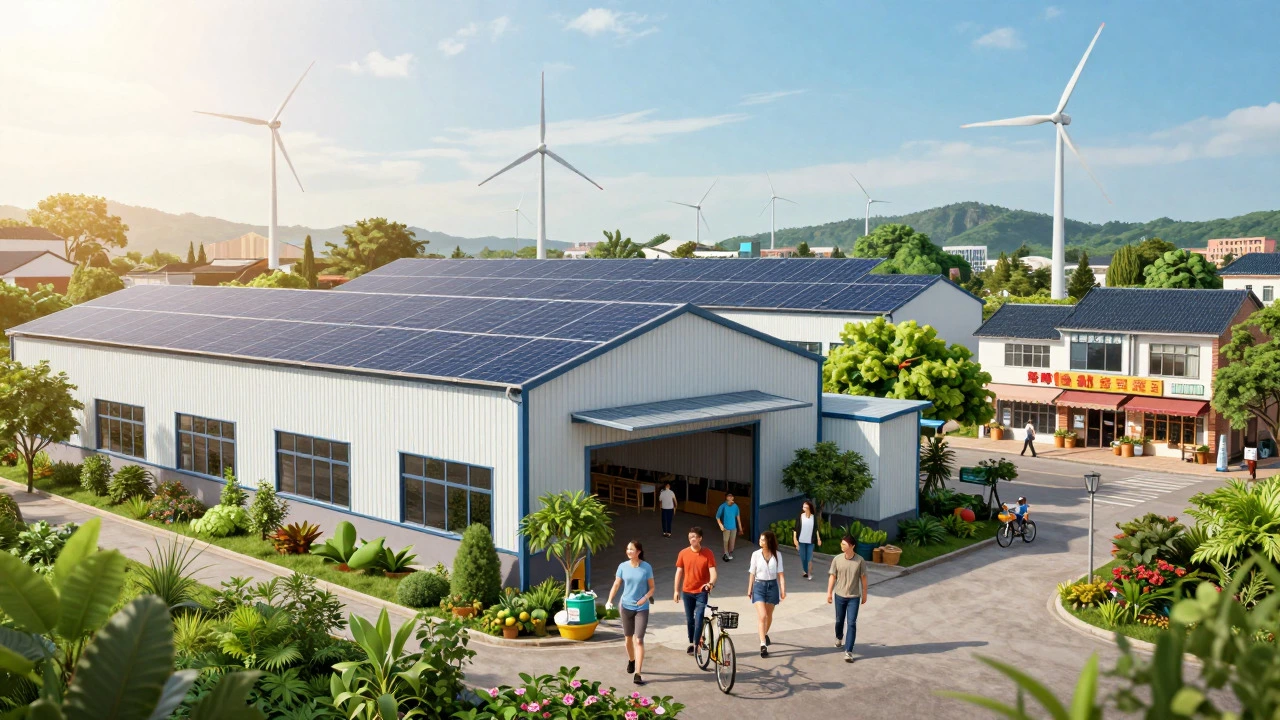
Let's talk about the environment. Shipping containers burn millions of tons of bunker fuel every year. Air freight, used for urgent deliveries, has an even higher carbon footprint. By producing locally, you drastically cut down on transportation emissions. This is a major win for climate goals.
Local factories are also more likely to adopt renewable energy. In Europe, many manufacturers are switching to solar and wind power, supported by EU regulations and incentives. They are investing in energy-efficient machinery and smart grid technologies. Consumers are increasingly demanding sustainable products. They want to know where their goods come from and how they were made. Local manufacturing offers transparency. You can trace the journey of a product from raw material to shelf, ensuring ethical labor practices and minimal environmental harm.
Furthermore, local production enables circular economy models. It is easier to collect used products, repair them, or recycle materials when the manufacturer is nearby. Instead of sending old electronics to landfills in developing countries, they can be disassembled and refurbished locally. This reduces waste and conserves resources, creating a more sustainable industrial cycle.
The Future of Making Things
The trend toward local manufacturing is not a temporary blip. It is a structural change in how the global economy works. Technology is making it cheaper and easier to produce locally. Additive manufacturing, or 3D printing, allows for complex parts to be printed on demand, eliminating the need for large inventories and long-distance shipping. Automation reduces the reliance on cheap manual labor, allowing factories to operate efficiently even with higher wage bills.
As consumers become more conscious of supply chain ethics and environmental impact, they will continue to favor local brands. Governments will keep supporting domestic industries to ensure economic resilience. The future belongs to companies that can combine the efficiency of global technology with the responsiveness and sustainability of local production.
So, what was so great about local manufacturing? It was never just about keeping jobs at home. It was about building a stronger, more flexible, and more innovative economy. It is about reducing risk, speeding up innovation, and protecting the planet. As we move forward, the question is no longer whether we should manufacture locally, but how quickly we can adapt to this new reality.
Is local manufacturing more expensive than importing?
On the surface, yes. Labor and operational costs are higher in developed nations. However, when you factor in shipping delays, tariffs, inventory holding costs, and the risk of supply chain disruptions, the total cost of ownership can be comparable or even lower for local production. Additionally, government grants and tax incentives can significantly offset these initial costs.
How do government schemes support local manufacturers?
Governments offer various forms of support, including direct grants for research and development, low-interest loans for capital investment, tax credits for hiring and training, and subsidies for adopting green technologies. Programs like the UK's ARIG or the US CHIPS Act are designed to reduce financial barriers and encourage domestic production of critical goods.
Can small businesses benefit from local manufacturing trends?
Absolutely. Small businesses thrive in local ecosystems due to shorter lead times and the ability to produce custom, small-batch orders. They can respond faster to market changes and build strong relationships with local suppliers and customers. Access to local innovation clusters and government support for SMEs further enhances their competitiveness.
What role does automation play in the resurgence of local manufacturing?
Automation is key. By using robots and AI-driven systems, local factories can maintain high productivity levels despite higher labor costs. Automation ensures consistent quality, reduces waste, and allows for 24/7 operation. It shifts the focus from manual labor to skilled technical roles, making local production economically viable again.
Does local manufacturing help the environment?
Yes, significantly. Reducing long-distance shipping cuts carbon emissions. Local factories are more likely to adopt renewable energy and sustainable practices due to stricter local regulations and consumer pressure. It also facilitates circular economy models, where products are repaired, recycled, or repurposed locally, minimizing waste.