Manufacturer Pitch Readiness Checker
Manufacturers don't buy ideas; they buy scalable projects. Use this checklist to see if you are a partner or a liability.
Your Readiness Score
- Manufacturers want a Technical Specification Document, not a sales pitch.
- A working prototype is your best negotiation tool to prove feasibility.
- Clear volume projections determine if you are a 'small fish' or a priority client.
- Non-Disclosure Agreements (NDAs) protect your IP, but don't let them stall the conversation.
Get Your House in Order Before the Call
Before you even look up a list of factories, you need to move from the 'idea phase' to the 'spec phase.' A manufacturer needs to know exactly what materials you want and how the parts fit together. If you tell them you want a 'durable plastic,' they'll ask which one. Do you mean ABS a common thermoplastic used for Lego bricks and electronic housings or Polycarbonate a high-impact resistant plastic used in safety glasses? These choices change the cost, the tooling, and the machinery required.
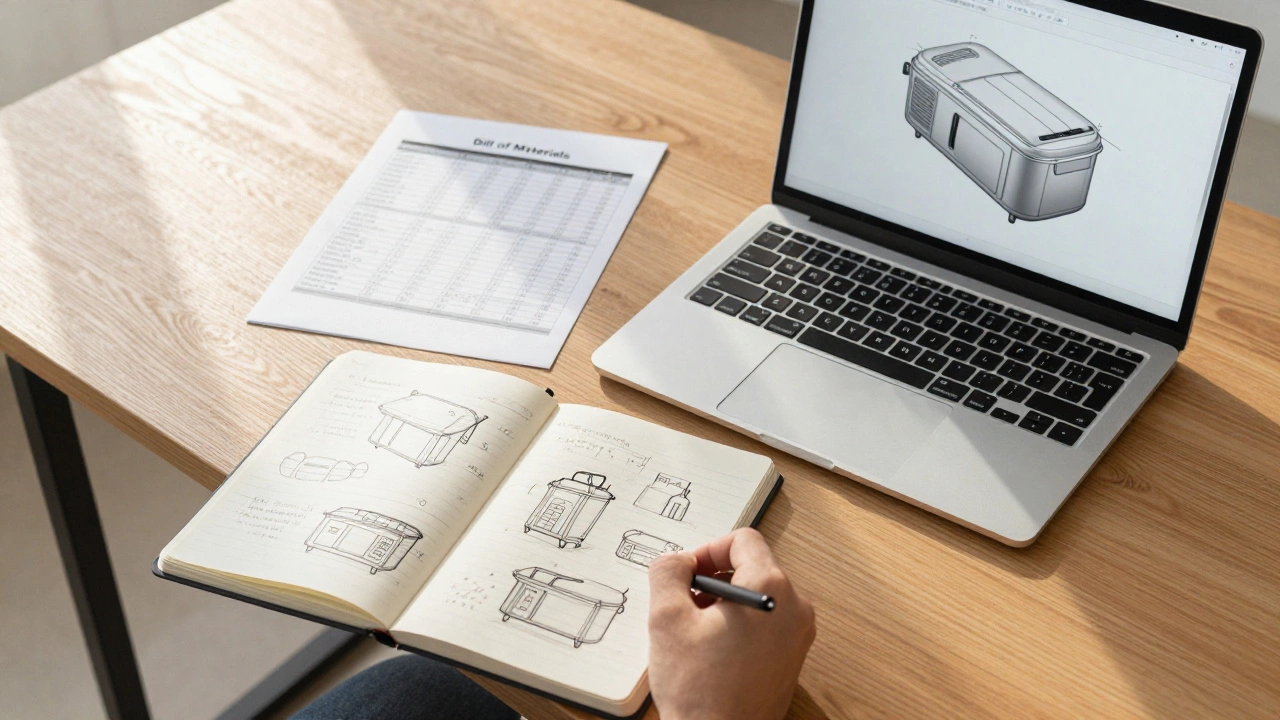
You should put together a Tech Pack. This isn't just a drawing; it's a blueprint. It should include dimensions, tolerances (how much a part can vary in size), and a Bill of Materials (BOM). The BOM is essentially a shopping list of every single screw, spring, and plastic pellet that goes into your product. When you show up with a professional BOM, you signal that you've done the math and aren't just guessing. It transforms the conversation from 'Can you do this?' to 'How will you do this?'
The Power of the Prototype
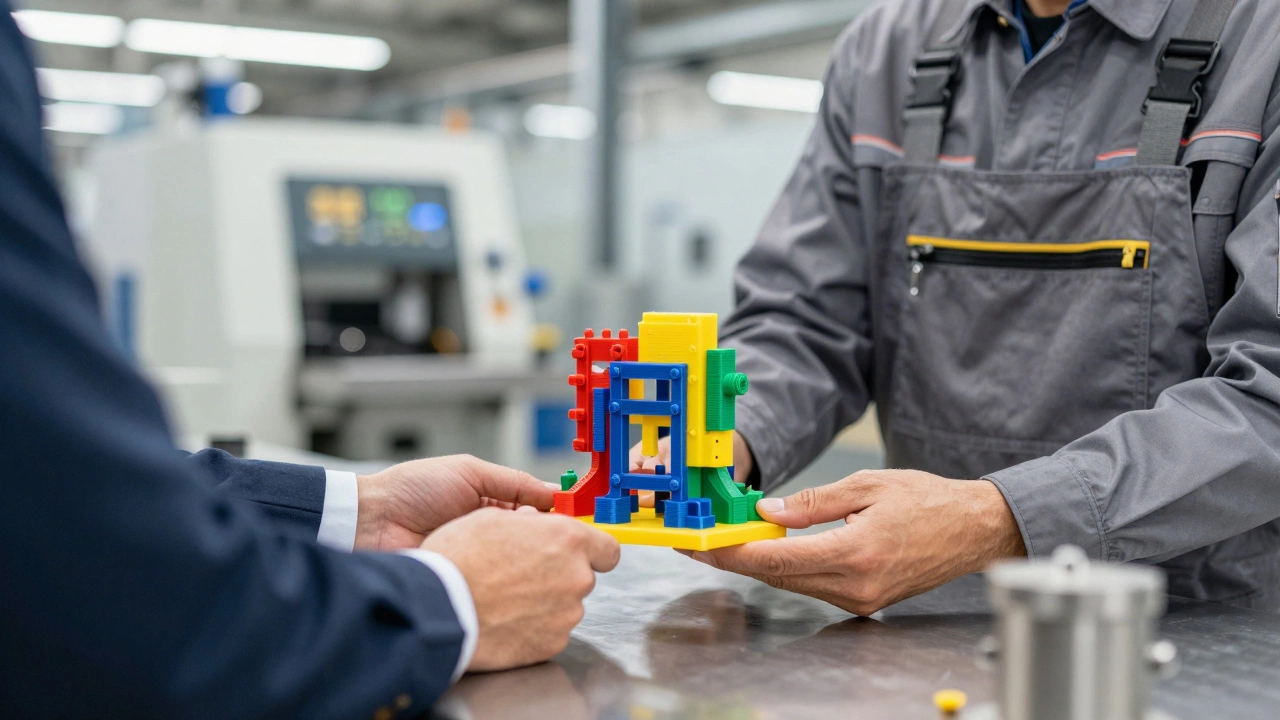
Talking about a product is a gamble; showing it is a certainty. You don't need a factory-perfect version, but you do need a Proof of Concept a preliminary model used to demonstrate that a design or idea is feasible. Whether it's a 3D-printed version from a Stereolithography (SLA) printer or a rough assembly of off-the-shelf parts, a physical object eliminates ambiguity.
When you hand a prototype to a production manager, they immediately start looking for 'pain points.' They'll see a sharp corner that's hard to mold or a screw placement that will slow down the assembly line. If you let them point these out during the pitch, you're collaborating. If you insist your design is perfect, you're ignoring the experts who actually run the machines. Use the prototype to ask, 'How would you change this to make it cheaper or faster to produce?' This approach turns the manufacturer into a consultant and makes them more invested in your success.
| Feature | Idea Stage | Prototype Stage | Production Ready |
|---|---|---|---|
| Manufacturer Interest | Very Low | Moderate | High |
| Key Document | Sketch/Deck | BOM / Basic CAD | DFM (Design for Manufacturing) |
| Risk Level | Extreme | Manageable | Low |
| Pricing Accuracy | Guesswork | Estimated | Exact Quotes |
Navigating the Legal Minefield
The biggest fear every startup founder has is their idea being stolen. This is where the Non-Disclosure Agreement a legal contract between two or more parties that outlines confidential material, knowledge, or information (NDA) comes in. However, be careful. Some top-tier manufacturers refuse to sign NDAs at the first meeting because they see hundreds of ideas a week and don't want the legal risk of being sued if they happen to produce something similar for another client.
If they won't sign an NDA immediately, don't panic. You can still protect yourself by sharing the 'what' but not the 'how.' Tell them what the product does and who the target market is, but keep the proprietary internal mechanisms or specific chemical formulas a secret until you've vetted the company. Check their references. Ask for a list of current clients. A reputable factory cares about their reputation more than they care about stealing a random startup's idea.
Talking Numbers: Volume and Scaling
Manufacturers live and die by Minimum Order Quantity the smallest number of units a supplier is willing to sell per order (MOQ). If you tell them you want to start with 50 units, but their machines are designed for 10,000, you're wasting your time. You need to have a realistic growth plan. Instead of saying 'I think we'll sell a lot,' say 'Our initial launch target is 2,000 units in Q1, scaling to 10,000 by year two based on our current pre-order interest.'
Be honest about your budget for Tooling the process of creating custom molds or dies used to mass-produce parts. Tooling is the biggest upfront cost in manufacturing. If you're doing injection molding, you're paying for a steel mold that can cost thousands of dollars. If you don't have that capital, suggest a smaller run using Vacuum Casting a process that produces a small number of high-quality plastic parts without expensive steel molds. Showing that you understand the financial constraints of the factory floor makes you look like a professional operator, not a hobbyist.
The Actual Pitch Meeting
When you finally sit down-whether it's on Zoom or in a dusty office in an industrial park-keep the focus on the partnership. Most founders spend 90% of the time talking about why their product is amazing. Shift that. Spend 40% on the product and 60% on the execution. Ask about their lead times, their quality control processes, and how they handle defective units.
Ask a specific question like, 'Looking at this design, where do you see the most likely point of failure during assembly?' This proves you're thinking about the reality of the production line. A manufacturer who gives you an honest, critical answer is worth ten who just say 'Yes, we can do that' to get your deposit. You want the partner who tells you why it won't work now so that it actually works when you launch.
Common Pitfalls to Avoid
One of the most frequent mistakes is 'feature creep.' This is when you keep adding small bells and whistles to the product during the pitching process. Every single addition changes the cost and potentially the tooling. Once you agree on a specification, lock it down. If you change the design three times during the quoting phase, the manufacturer will either raise the price to cover the risk or stop taking you seriously.
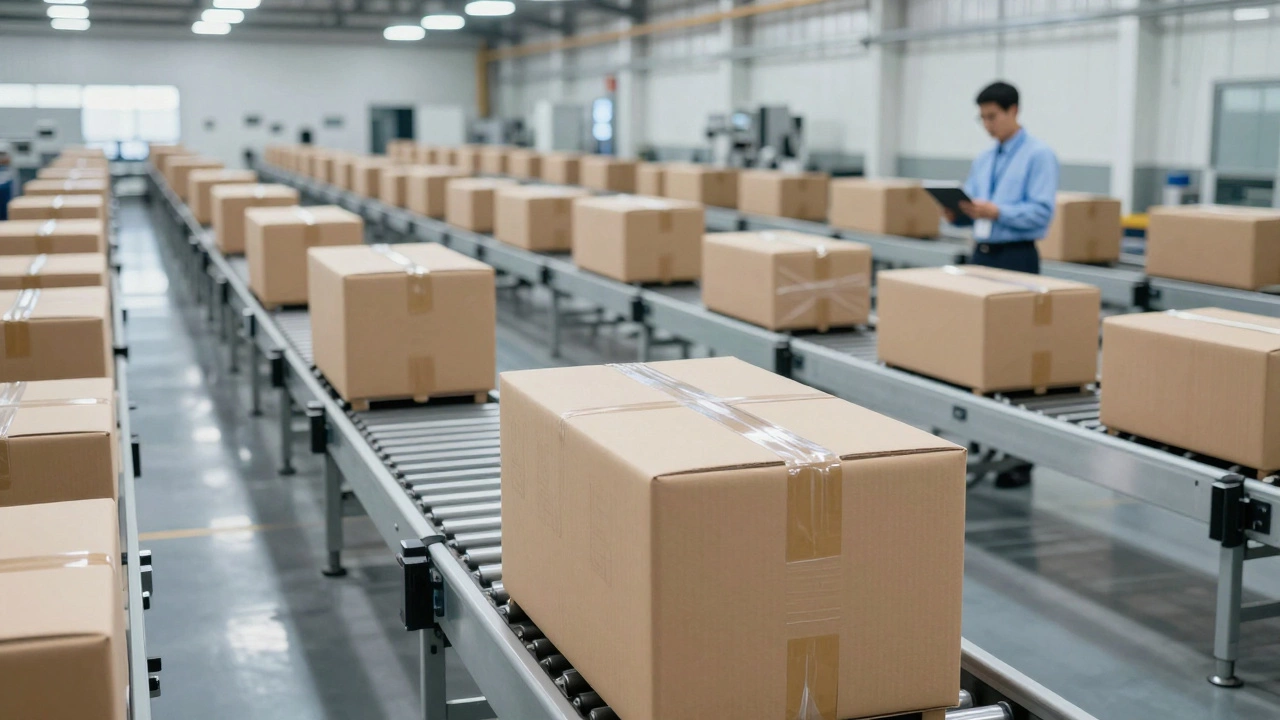
Another trap is ignoring the packaging. A product isn't finished until it can be shipped. If you pitch a product but have no plan for how it fits in a box or how it's protected during transit, you're leaving a huge gap in your operation. Mention your packaging requirements early. Whether it's sustainable cardboard or custom foam inserts, it shows you've thought through the entire journey from the factory floor to the customer's doorstep.
What happens if a manufacturer says my MOQ is too high?
You have a few options. First, try to negotiate a 'staged' rollout where you pay for the full MOQ but they ship in smaller batches. Second, look for a 'bridge' manufacturer-smaller shops that use slower processes (like 3D printing or CNC machining) for the first few hundred units before moving to high-volume injection molding. Third, consider simplifying your design to use off-the-shelf components that don't require custom tooling.
How much should I pay for a sample or prototype?
Samples are always expensive because the factory has to stop their mass-production line to set up a one-off run. Expect to pay 5x to 10x the eventual unit cost for a sample. This is normal. Don't try to negotiate the price of a single sample; instead, negotiate whether the sample cost will be credited back to you once you place a full production order.
Do I need a patent before pitching to a manufacturer?
While not strictly required, filing a 'provisional patent' is a smart move. It's cheaper and faster than a full patent and gives you a 'patent pending' status for 12 months. This provides a layer of legal protection and tells the manufacturer that you are serious about your intellectual property, making them less likely to attempt to copy the design.
What is the difference between an OEM and a ODM?
OEM (Original Equipment Manufacturer) means they build exactly what you design. You provide the blueprints; they provide the labor and machines. ODM (Original Design Manufacturer) means they already have a product design that you can 'white label' or slightly tweak. ODM is faster and cheaper but gives you less control over the unique features of your product.
How do I handle quality control with a remote manufacturer?
Never pay the full balance before a third-party inspection. Hire a quality control agent (local to the factory) to perform a 'Pre-Shipment Inspection' (PSI). They will randomly select units from the batch and test them against your Tech Pack. If the units fail, you don't release the final payment until the factory fixes the errors.
Next Steps for Your Journey
If you're just starting, your first move shouldn't be a phone call; it should be a CAD Model a 3D digital representation of a physical object used for engineering and manufacturing. Hire a freelance industrial designer to turn your sketches into a STEP file. This file is the universal language of manufacturing.
Once you have your files, create a shortlist of five factories. Reach out to them not as a 'visionary,' but as a project manager. Ask for their capabilities, their current lead times, and if they've worked with your specific materials before. The goal is to build a relationship based on mutual respect for the technical process, rather than a plea for them to believe in your idea.