
Manufacturing Unit Economics Calculator
Cost Inputs
Financial Health Check
Total Cost
$0.00Profit Margin
0%Cost Structure Breakdown
- Material Cost 0%
- Labor Cost 0%
- Overhead 0%
- Net Profit $0.00
Recommendation:
Based on your inputs...
Enter your estimated costs and selling price to analyze your manufacturing unit economics.
You don't need a massive factory floor or millions in venture capital to start making things. In fact, the modern landscape of manufacturing startups is defined by agility, not just volume. Whether you are looking to build custom furniture, produce specialized electronic components, or create niche food products, the barrier to entry has lowered significantly thanks to digital tools and flexible supply chains. The question isn't whether you can get into manufacturing; it's how you do it without burning through your savings in month one.
Many aspiring founders romanticize the idea of 'making stuff' but underestimate the operational complexity. You aren't just designing a product; you are managing raw materials, labor hours, machine maintenance, logistics, and quality control simultaneously. This guide cuts through the noise and gives you a concrete roadmap to launch a viable manufacturing business in today's market.
Validate Your Product Before You Buy a Machine
The biggest mistake new manufacturers make is falling in love with their production method rather than solving a customer problem. Before you lease a workshop or buy a CNC machine, you need proof that people will buy what you plan to make. This phase is about product validation, and it requires getting out of your head and into the market.
Start by creating a Minimum Viable Product (MVP). If you want to make sustainable packaging, hand-make fifty units. If you're building smart home devices, assemble them on a workbench using off-the-shelf parts. Sell these initial batches directly to early adopters. Their feedback is worth more than any focus group data. Are they willing to pay your target price? Do they understand the value proposition? If the answer is no, pivot now while your costs are low.
- Identify a niche: Avoid competing directly with giants like Foxconn or Unilever. Look for gaps in local markets or specific industries underserved by mass production.
- Calculate unit economics: Know exactly how much it costs to make one unit, including material waste, labor, and overhead. If your margin is less than 30%, you have a fragile business model.
- Secure pre-orders: Try to get customers to commit before you scale up production. This reduces financial risk and validates demand.
Choose Your Manufacturing Model
Once you have a validated product, you need to decide how it gets made. There is no single right answer, but each model carries different risks and rewards. Understanding these options is crucial for structuring your operations correctly.
| Model | Best For | Pros | Cons |
|---|---|---|---|
| In-House Production | High-margin, low-volume goods | Full quality control, IP protection | High upfront capex, complex staffing |
| Contract Manufacturing | Scaling quickly, electronics, textiles | Lower fixed costs, faster time-to-market | Less control over quality, lower margins |
| Micro-Factories | Customized products, local delivery | Agility, community connection | Limited scalability, higher per-unit cost |
If you choose contract manufacturing, you outsource production to third-party factories. This is common in electronics and apparel. It allows you to focus on design and marketing while experts handle the heavy lifting. However, you must conduct rigorous due diligence. Visit the facilities. Check their certifications (like ISO 9001). Start with small batches to test reliability before committing to large orders.
In-house production gives you total control but requires significant investment in equipment and skilled labor. This model works best if your competitive advantage lies in unique craftsmanship or proprietary technology that you cannot share with outsiders. Micro-factories represent a middle ground, leveraging automation to produce small batches efficiently within local communities.
Master Supply Chain and Sourcing
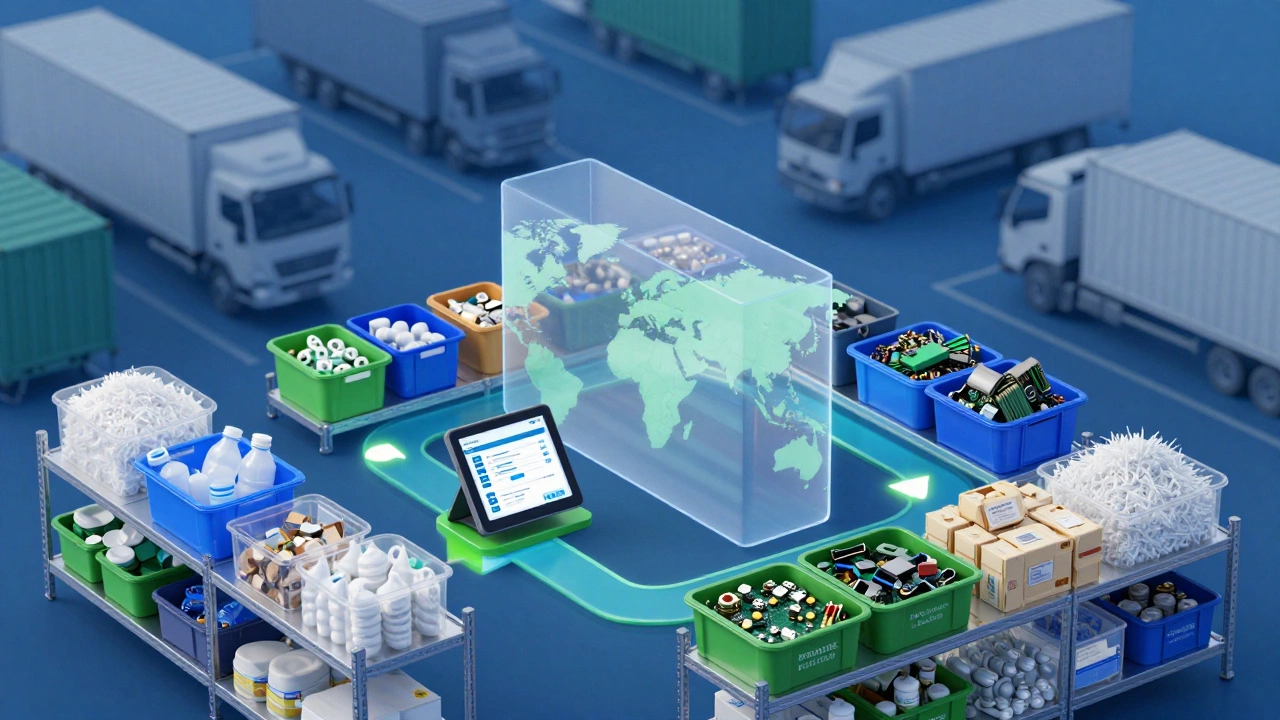
A manufacturing business is only as strong as its weakest link in the supply chain. Many startups fail not because their product is bad, but because they run out of raw materials or face unpredictable shipping delays. Building a resilient supply chain involves diversifying suppliers and maintaining open communication.
Don't rely on a single supplier for critical components. If your main plastic resin provider goes offline, your entire line stops. Identify at least two backup suppliers for every key material. Negotiate terms that protect you from sudden price hikes, especially for commodities subject to global volatility. Consider joining industry associations or trade groups to access vetted supplier networks.
Inventory management is another critical area. Holding too much stock ties up cash and risks obsolescence. Holding too little leads to missed sales and angry customers. Implement an inventory tracking system early, even if it's just a well-organized spreadsheet initially. As you grow, transition to dedicated ERP (Enterprise Resource Planning) software that integrates inventory, sales, and procurement data.
Navigate Regulations and Compliance
Manufacturing is heavily regulated, and ignoring compliance can lead to fines, shutdowns, or liability lawsuits. The specific regulations depend on your industry and location, but some universal principles apply. Safety is paramount. Ensure your workspace meets occupational health and safety standards. This includes proper ventilation, machine guarding, and employee training protocols.
Environmental regulations are also tightening globally. Understand the waste disposal requirements for your materials. If you use chemicals, solvents, or metals, you need permits for handling and disposal. Sustainable practices aren't just good PR; they reduce long-term operational risks and appeal to increasingly conscious consumers. Look into certifications like B Corp or specific environmental labels relevant to your sector.
Product safety standards vary by market. If you plan to sell internationally, research the requirements for each region. For example, electronics sold in Europe need CE marking, while those in the US require FCC certification. Food products must comply with FDA or EFSA guidelines. Non-compliance can result in seized shipments and reputational damage.
Implement Lean Manufacturing Principles
Efficiency is the lifeblood of manufacturing. Lean manufacturing is a methodology focused on minimizing waste without sacrificing productivity. Waste here doesn't just mean scrap material; it includes excess inventory, waiting times, overproduction, and unnecessary motion.
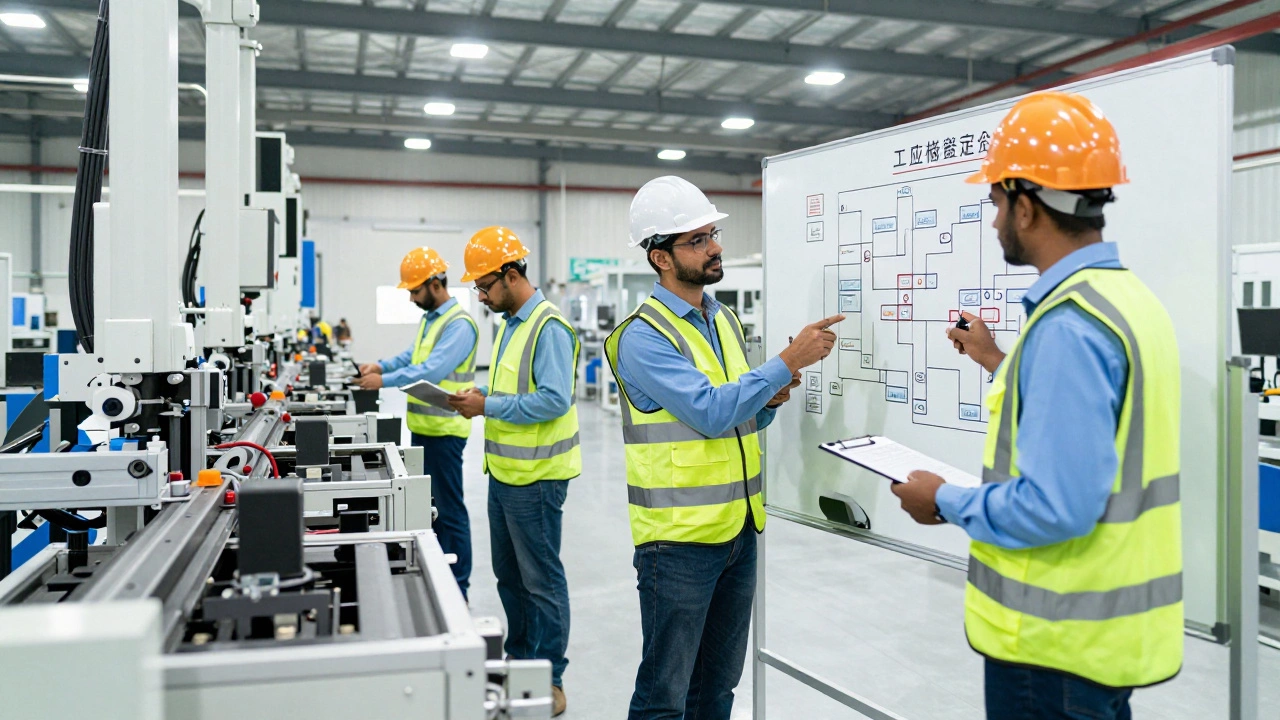
Start by mapping your value stream. Trace every step from raw material arrival to finished product shipment. Identify bottlenecks where work piles up or processes stall. Eliminate non-value-added activities. For instance, if workers spend twenty minutes a day walking to fetch tools, reorganize the workspace so tools are within arm's reach.
Adopt a continuous improvement mindset, often referred to as Kaizen. Encourage employees at all levels to suggest improvements. Small changes, when aggregated, can lead to significant efficiency gains. Measure key performance indicators (KPIs) such as cycle time, defect rate, and overall equipment effectiveness (OEE). Use this data to drive decisions rather than relying on gut feeling.
Fund Your Growth Strategically
Manufacturing is capital-intensive. You'll need money for equipment, inventory, rent, and salaries before you see consistent revenue. Bootstrapping is possible for very small operations, but most founders need external funding. Explore various sources based on your stage and needs.
Small business loans from banks offer traditional financing but require collateral and strong credit history. Government grants and subsidies are available for innovative or green manufacturing projects. Check local economic development agencies for support programs. Venture capital is suitable if you have high-growth potential and are willing to give up equity. Crowdfunding platforms like Kickstarter can also validate demand and raise initial capital simultaneously.
Create a detailed financial plan. Project your cash flow for at least eighteen months. Include worst-case scenarios where sales are slower than expected or costs rise. Maintain a cash reserve to cover at least three months of operating expenses. This buffer provides breathing room during unexpected disruptions.
Build a Skilled Team
Your team is your greatest asset. Manufacturing requires a mix of technical skills, problem-solving abilities, and attention to detail. Hire people who share your commitment to quality and continuous improvement. Don't just look for resumes; assess cultural fit and willingness to learn.
Invest in training. Technology evolves rapidly, and your workforce needs to keep pace. Offer cross-training opportunities so employees can perform multiple roles. This increases flexibility and resilience. Foster a culture of safety and respect. When employees feel valued and safe, turnover decreases, and productivity increases.
Consider partnering with local vocational schools or universities. They often provide access to talented graduates seeking practical experience. Internship programs can be a pipeline for future full-time hires. Building relationships with educational institutions also enhances your community standing and may open doors to collaborative research projects.
How much capital do I need to start a manufacturing business?
The amount varies wildly depending on the industry and scale. A micro-manufacturing operation producing handmade goods might start with $5,000-$10,000 for basic tools and materials. Conversely, setting up a small-scale electronics assembly line could require $50,000-$100,000+ for equipment, testing gear, and initial inventory. Always factor in working capital for at least six months of operations.
Is it better to manufacture in-house or outsource?
It depends on your priorities. In-house manufacturing offers greater control over quality, intellectual property, and scheduling, but comes with higher fixed costs and complexity. Outsourcing (contract manufacturing) reduces upfront investment and allows faster scaling, but you sacrifice some control and margin. Many successful companies start in-house to refine their process and then outsource as they scale.
What are the biggest risks in starting a manufacturing business?
Supply chain disruptions are a major risk, as delays in raw materials halt production. Quality control failures can lead to costly recalls and brand damage. Cash flow mismanagement is another common pitfall, where businesses run out of money despite having orders. Finally, regulatory non-compliance can result in fines or forced shutdowns.
How can I ensure product quality consistency?
Implement standardized operating procedures (SOPs) for every step of the production process. Use checklists and visual aids to guide workers. Invest in quality inspection tools and train staff to identify defects early. Regularly audit your processes and gather customer feedback to catch issues before they become systemic problems.
Do I need special licenses to start manufacturing?
Yes, requirements vary by location and product type. Generally, you need a general business license. Specific industries like food, pharmaceuticals, or chemicals require additional permits from health and safety authorities. Environmental permits may be needed for waste disposal or emissions. Always consult with local regulatory bodies and legal counsel to ensure full compliance.