Food Processing Unit Selector
Find Your Ideal Processing Units
Answer these 3 questions to determine which processing units match your food production needs
When you think about how your favorite snacks, canned soups, or frozen meals end up on store shelves, it’s easy to imagine a big factory with robots and conveyor belts. But behind every packaged food product is a specific kind of processing unit designed for that exact job. Not all food processing units are the same. The type used depends entirely on what you’re making - whether it’s juice, bread, cheese, or ready-to-eat meals. Knowing the different kinds helps you understand why some foods are cheaper, safer, or last longer than others.
Thermal Processing Units
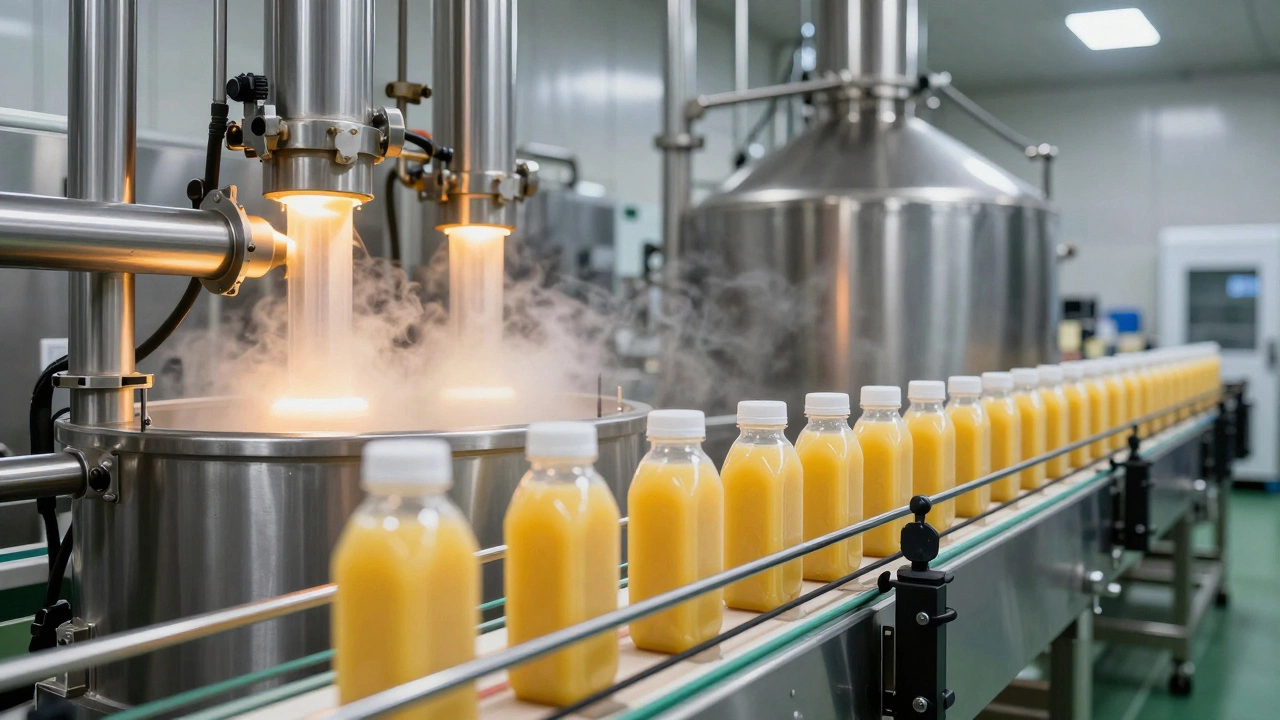
Thermal processing is the oldest and still the most common method in food production. These units use heat to kill bacteria, extend shelf life, and change texture. Think of pasteurization for milk, canning for vegetables, or retorting for ready-to-eat meals in pouches.
There are two main types: batch and continuous. Batch units process food in fixed quantities - like a big vat of soup heated and sealed one lot at a time. These are common in small factories or when making specialty products. Continuous units, on the other hand, move food through a system non-stop. Aseptic filling lines for juice boxes or UHT (ultra-high temperature) milk lines are examples. They’re faster, more efficient, and used by big brands.
Heat sources vary. Steam is most common because it’s clean and controllable. Some units use direct flame for roasting or grilling, like in meat processing plants. Others use microwave or infrared for quick heating without cooking the whole product. The key is precision - too little heat and pathogens survive; too much and nutrients or flavor are destroyed.
Mechanical Processing Units
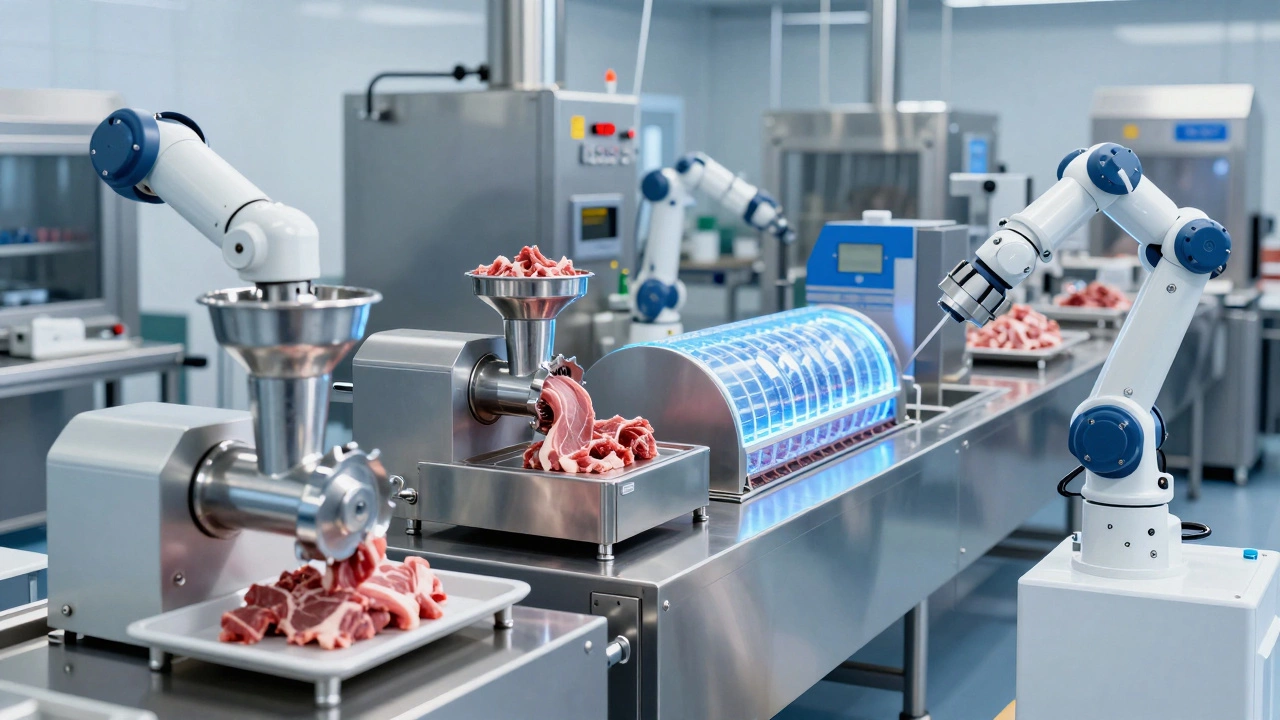
These units don’t rely on heat. Instead, they change food physically - cutting, grinding, mixing, pressing, or separating. If you’ve ever seen a fruit being peeled by spinning blades or wheat being ground into flour, that’s mechanical processing.
Common types include:
- Grinders and choppers: Used for meat, vegetables, and spices. Industrial grinders can process 500 kg of meat per hour.
- Extruders: These push dough or paste through shaped dies to make pasta, breakfast cereals, or pet food. The high pressure and friction inside create heat, so extrusion often combines mechanical and thermal processing.
- Centrifuges and separators: Used in dairy to separate cream from milk, or in oil extraction to pull olive or palm oil from pulp.
- Blenders and mixers: Large stainless steel tanks that combine ingredients evenly. Think of cake batter, sauces, or seasoning blends.
These units are often the first step in a production line. For example, tomatoes go through a crusher, then a seeder, then a paste thickener - all mechanical steps before they’re pasteurized. The design matters: food-grade stainless steel, easy-to-clean surfaces, and no hidden crevices are non-negotiable for safety.
Cryogenic and Freezing Units
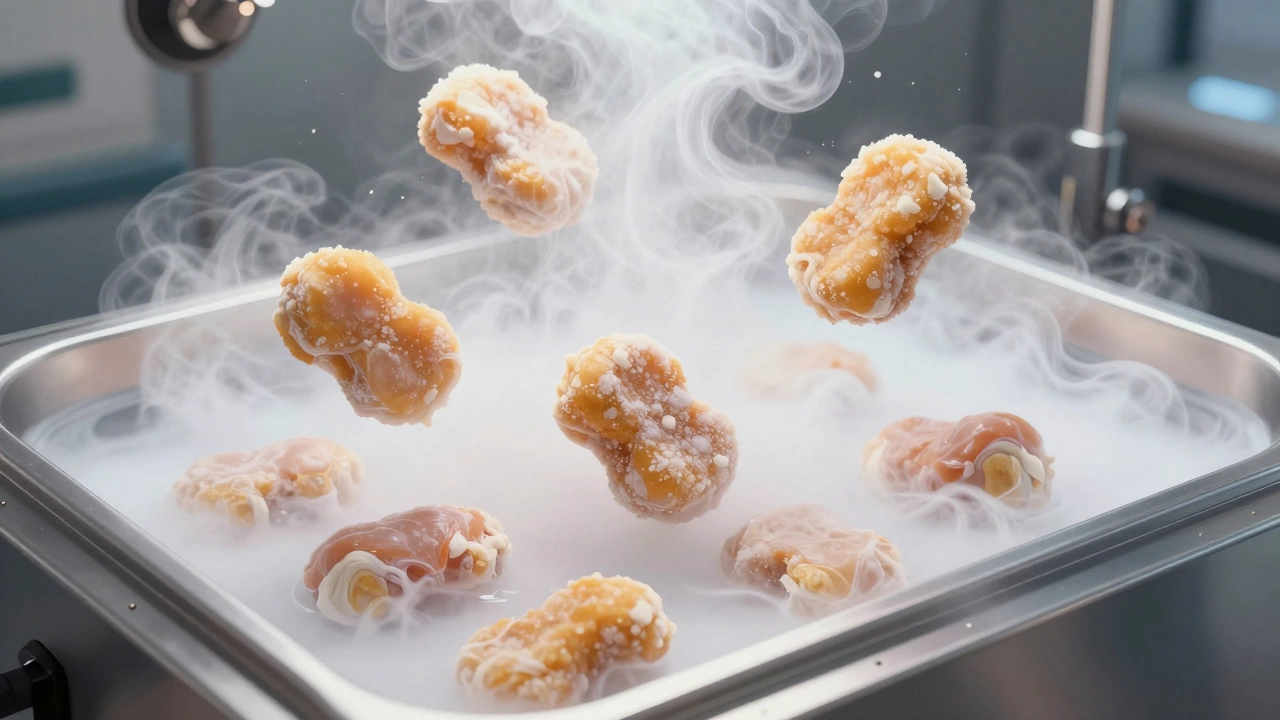
Freezing isn’t just about putting food in a cold room. Modern food processing uses cryogenic systems that freeze products in seconds, not hours. This locks in flavor, texture, and nutrients better than slow freezing.
There are three main types:
- Immersion freezers: Food is dipped in liquid nitrogen or CO2. Used for small items like berries, shrimp, or peas.
- Fluidized bed freezers: Cold air blasts upward through a tray, lifting and freezing pieces individually. Great for fries, vegetables, or chicken nuggets.
- Conveyor belt freezers: Products move slowly through a super-cold tunnel. Common for large batches of pizza, meals, or baked goods.
Cryogenic freezing uses liquid nitrogen at -196°C. It’s expensive but fast. Many companies use it for premium products because it reduces ice crystal damage - meaning your frozen strawberries don’t turn mushy after thawing.
Separation and Purification Units
Not all food processing adds things - sometimes it’s about taking things away. Separation units remove unwanted parts: water, fat, fibers, or contaminants.
Examples include:
- Membrane filtration: Used in dairy to remove bacteria from milk without heat (microfiltration) or to concentrate proteins (ultrafiltration).
- Decanters and centrifuges: Separate solids from liquids in fruit juices, olive oil, or brewing waste.
- Evaporators: Remove water from liquids to make syrups,浓缩果汁, or powdered milk. Multi-effect evaporators reuse steam to cut energy use.
- Clarifiers and filters: Remove pulp from juice or yeast from beer.
These units are critical for quality control. A juice brand that doesn’t filter properly ends up with cloudy, unstable products. A dairy plant that skips microfiltration risks spoilage or recalls.
Automated Packaging and Labeling Units
Processing doesn’t end when the food is ready. Packaging is part of the system - and it’s highly specialized. The right packaging keeps food safe, fresh, and marketable.
Types include:
- Vacuum sealers: Remove air to prevent oxidation. Used for cheese, meats, and nuts.
- Modified Atmosphere Packaging (MAP): Flushes the package with nitrogen or CO2 instead of air. Extends shelf life of salads, sandwiches, and fresh meat.
- Form-fill-seal machines: Create the bag, fill it, and seal it in one step. Common for snacks, coffee, and powdered drinks.
- Robotic case packers: Automatically place boxes into cartons for shipping.
- Labeling and coding systems: Print batch numbers, expiry dates, and barcodes directly on packages using inkjet or laser printers.
These units must sync with the rest of the line. If the filler runs too fast, the sealer can’t keep up. If the label printer jams, entire batches get delayed. Integration is everything.
Hybrid and Integrated Processing Lines
Most modern food factories don’t use just one type of unit. They combine them into full production lines. Think of a chicken nugget factory: birds are slaughtered, then eviscerated (mechanical), washed (hygienic rinse), deboned (mechanical), minced (grinder), mixed with batter (mixer), breaded (coater), fried (thermal), frozen (cryogenic), packaged (MAP), and labeled - all on one automated line.
These integrated systems are designed for efficiency. Sensors monitor temperature, weight, and speed in real time. If a batch of meat is too warm, the line automatically slows down. If a bag is underfilled, it’s rejected before it leaves.
Small producers might use a few standalone units. Large companies invest in fully automated lines that can run 24/7. The cost? A basic line for snacks might cost £200,000. A full chicken processing line? Over £5 million.
What Type Do You Need?
Choosing the right processing unit depends on three things: the food, the volume, and the goal.
If you’re making artisanal jam in small batches, a simple thermal kettle and hand-sealing machine might be enough. If you’re producing 10,000 jars a day, you need a continuous pasteurizer, automatic filler, and capper.
Here’s a quick guide:
- Low volume, high quality: Batch thermal + manual packaging
- Medium volume, consistent quality: Continuous thermal + semi-automated packaging
- High volume, low cost: Integrated line with cryogenic freezing, extrusion, and MAP
Don’t just copy what the big players use. Match the unit to your product. A bakery making sourdough doesn’t need a high-speed extruder. A juice brand trying to compete with supermarket brands can’t rely on hand-poured bottles.
Common Mistakes to Avoid
Many small food businesses make the same errors when setting up processing:
- Buying cheap equipment that can’t be cleaned properly - leads to contamination
- Skipping validation - you must prove your thermal process kills pathogens, not just guess
- Over-investing in automation before you have steady demand
- Ignoring hygiene design - corners, gaps, and non-food-grade materials are red flags
- Not testing shelf life - your product might look fine, but it could spoil in 10 days
Regulators like the UK Food Standards Agency don’t just check labels. They inspect your equipment. If your grinder has rust or your packaging line leaks, you can be shut down.
Start simple. Grow smart. The right unit for your product today might be a single mixer and oven. Tomorrow, it could be a full line. But only build what you need - not what looks impressive.