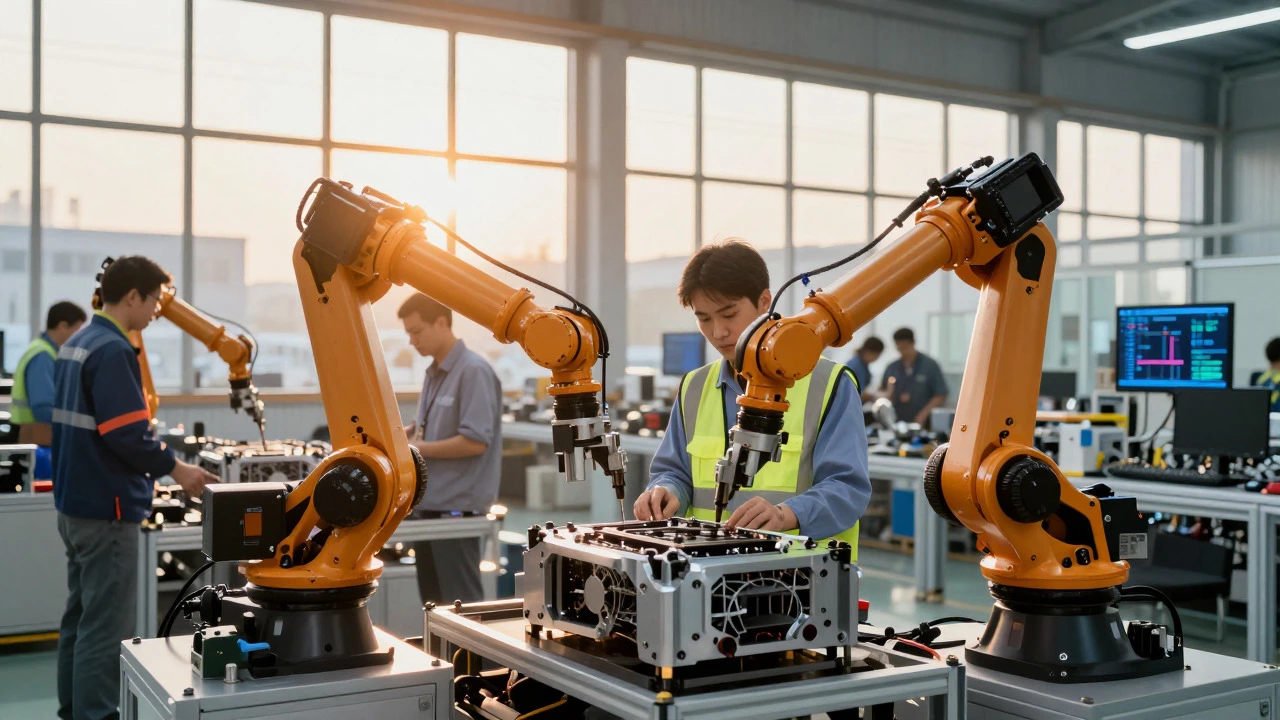
Manufacturing Economic Impact Calculator
Configuration
Projected Economic Impact
Total Jobs Supported
Annual GDP Contribution
Direct Annual Wages Generated
Walk past any abandoned factory in the Rust Belt or drive through a bustling industrial park in Texas, and you see two very different stories. But both tell the same truth: American manufacturing is the backbone of the U.S. economy, contributing over $2.5 trillion annually to GDP while employing nearly 13 million people. It’s not just about making things; it’s about keeping the lights on, feeding families, and defending the nation.
When we talk about how manufacturing helps America, we aren’t just counting widgets. We’re looking at a complex engine that drives innovation, secures borders, and stabilizes communities. From the microchips powering your phone to the steel beams holding up skyscrapers, this sector touches every part of daily life. Let’s break down exactly why this industry remains non-negotiable for the United States.
The Economic Engine: More Than Just Jobs
Manufacturing doesn’t just create jobs; it creates high-quality jobs with ripple effects across the entire economy. For every one job in manufacturing, there are roughly three additional jobs supported in other sectors-think logistics, software development, legal services, and maintenance. This multiplier effect is powerful. When a car plant opens in Ohio, it doesn’t just hire assembly line workers. It hires engineers, IT specialists, truck drivers, and local restaurant owners who benefit from increased spending.
Wages in manufacturing also tend to be higher than the national average. According to recent Bureau of Labor Statistics data, production occupations often pay significantly more than service-sector roles, even when adjusting for education levels. This wage premium supports middle-class stability. Families earning these wages buy homes, send kids to college, and invest in their communities. That spending circulates locally, strengthening small businesses and tax bases.
But the real magic happens in productivity growth. Manufacturing has been the primary driver of U.S. productivity gains for decades. Innovations developed on factory floors-like lean management techniques or automated robotics-often spill over into other industries. A process improvement in automotive assembly might later revolutionize food packaging or medical device production. This cross-pollination keeps the broader economy competitive globally.
| Metric | Value | Impact |
|---|---|---|
| GDP Contribution | $2.5+ Trillion | Funds public services and infrastructure |
| Employment Multiplier | 1:3 Ratio | Supports indirect jobs in supply chains |
| R&D Spending | ~60% of Private Sector | Drives technological innovation nationwide |
| Export Value | $300+ Billion Annually | Improves trade balance and global influence |
National Security and Supply Chain Resilience
You don’t have to look far to see why supply chain resilience is the ability of an economy to withstand disruptions and maintain critical production capabilities during crises. The pandemic taught us a harsh lesson: relying too heavily on foreign sources for essential goods can cripple a nation. When hospitals ran out of masks, ventilators, and gloves, it wasn’t just an inconvenience-it was a threat to public health.
Manufacturing keeps critical capabilities within American borders. Defense contractors need domestic access to rare earth metals, semiconductors, and advanced materials to build fighter jets, submarines, and missile systems. If those supplies come from geopolitical rivals, the military’s readiness is compromised. By maintaining a robust industrial base, the U.S. ensures it can respond quickly to emergencies without being held hostage by foreign politics.
This extends beyond defense. Medical devices, pharmaceutical ingredients, and energy infrastructure components all require reliable domestic sourcing. The CHIPS and Science Act, passed in 2022, aimed to bring semiconductor fabrication back to the U.S., recognizing that chips are as vital to modern warfare as they are to consumer electronics. Without homegrown chip capacity, everything from power grids to communication networks becomes vulnerable.
Resilience isn’t just about having backup suppliers; it’s about controlling the entire value chain. When design, prototyping, and final assembly happen close together, companies can iterate faster and adapt to changing threats. This agility is crucial for national security in an era of rapid technological change.

Innovation Hub: Where Ideas Become Reality
We often think of Silicon Valley as the heart of innovation, but manufacturing is where ideas get tested and refined. Roughly 60% of private-sector research and development (R&D) spending occurs in the manufacturing sector. Why? Because you can’t innovate what you can’t make. Engineers need physical prototypes to test theories, adjust designs, and solve problems.
Consider electric vehicles (EVs). Battery technology didn’t advance because someone had a great idea on paper. It advanced because manufacturers like Tesla, Ford, and GM built thousands of miles of test tracks, assembled millions of batteries, and learned from failures. Each iteration made cars safer, cheaper, and more efficient. This feedback loop between R&D and production accelerates progress in ways pure software development never could.
Advanced manufacturing techniques-such as 3D printing, AI-driven quality control, and digital twins-are transforming traditional factories into smart hubs. These technologies reduce waste, improve precision, and enable mass customization. A company can now produce unique parts for individual customers at scale, something unimaginable twenty years ago. This level of flexibility attracts talent and investment, creating a virtuous cycle of innovation.
Universities and national labs partner closely with manufacturers to bridge the gap between academic research and commercial application. Programs funded by agencies like the Department of Energy help translate lab breakthroughs into market-ready products. Whether it’s carbon capture technology or next-generation solar panels, manufacturing provides the pathway from concept to reality.
Community Stability and Rural Revitalization
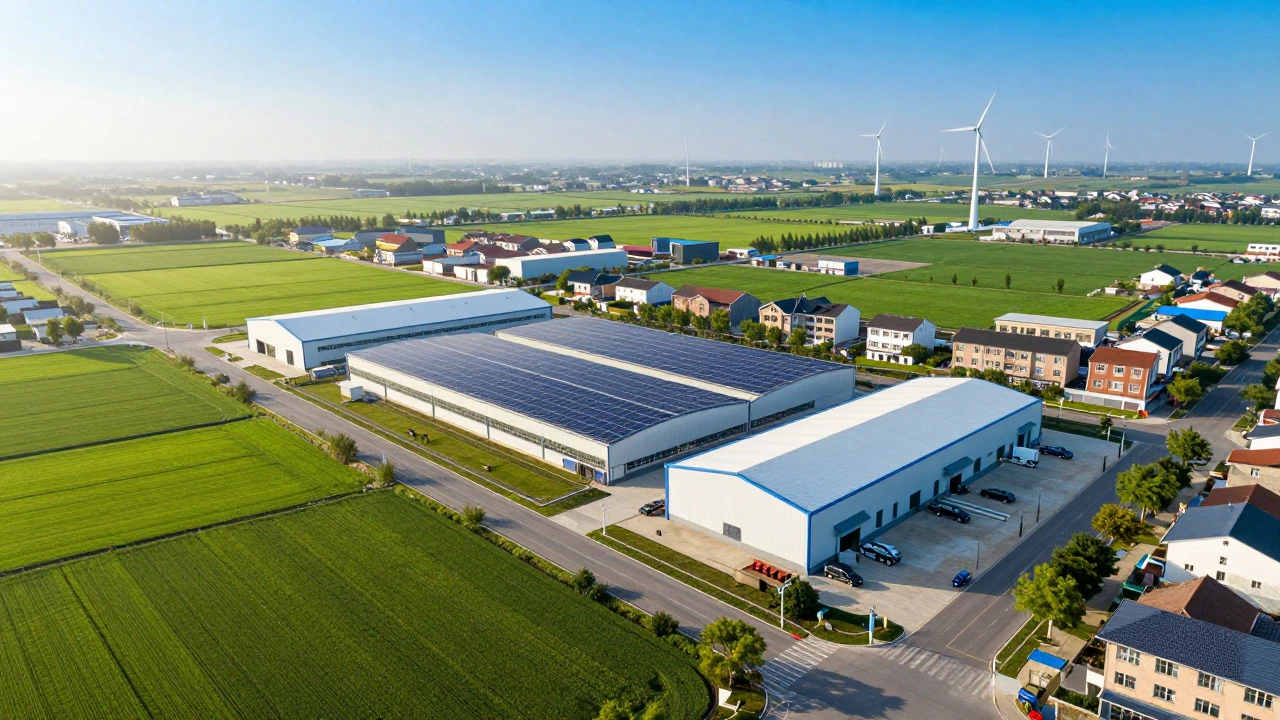
Manufacturing plants are often anchors in rural and small-town America. Unlike tech startups that cluster in urban centers, factories spread across states, bringing jobs to areas that might otherwise struggle. Towns in Indiana, Michigan, and South Carolina thrive because of nearby auto plants, furniture makers, or textile mills. These facilities provide stable employment opportunities for residents who may not have access to four-year universities.
When a factory closes, the impact is devastating. Local businesses lose customers, property values drop, and young people leave for better prospects elsewhere. Conversely, when new manufacturing investments arrive-like the surge in battery gigafactories supporting EV production-they breathe life back into dormant regions. Workers gain skills that transfer to other industries, and communities rebuild their social fabric.
Government schemes play a role here too. Initiatives like the Build Back Better plan include provisions for clean energy manufacturing incentives, aiming to create green jobs in historically industrial areas. By targeting investments in underserved regions, policymakers hope to reverse decades of decline and offer pathways to prosperity for working-class Americans.
Stability matters. Manufacturing offers predictable schedules, benefits packages, and union representation in many cases. This predictability allows families to plan long-term, knowing their income won’t vanish overnight due to algorithmic changes or seasonal fluctuations common in gig work.
Environmental Progress Through Industrial Efficiency
It’s easy to paint manufacturing as dirty, but modern facilities are leaders in sustainability. As regulations tighten and consumer demand shifts, companies are investing heavily in cleaner processes. Electric arc furnaces recycle scrap steel instead of mining virgin ore. Chemical plants capture emissions for reuse rather than releasing them into the atmosphere. These efforts reduce pollution while lowering operational costs.
Circular economy principles are gaining traction. Instead of discarding waste, manufacturers find ways to repurpose it. Plastic bottles become polyester fiber for clothing. Food scraps turn into biogas for heating. This shift minimizes landfill use and conserves resources. Governments support this transition through tax credits and grants, encouraging adoption of eco-friendly practices.
Green manufacturing also opens new markets. Companies producing wind turbine blades, solar panels, and hydrogen fuel cells are expanding rapidly. These sectors rely on specialized manufacturing expertise to scale up production efficiently. By leading in sustainable manufacturing, the U.S. positions itself as a global exporter of clean technology solutions.
Moreover, energy efficiency improvements in factories contribute directly to climate goals. Upgrading lighting, optimizing HVAC systems, and automating machinery reduces electricity consumption. Over time, these incremental changes add up to significant reductions in greenhouse gas emissions. Manufacturing isn’t just adapting to environmental challenges; it’s helping solve them.
Does manufacturing still matter if most jobs are in services?
Absolutely. While services dominate employment numbers, manufacturing drives productivity and exports. It creates high-wage jobs that support surrounding industries. Without strong manufacturing, service sectors lack the goods and infrastructure needed to function effectively.
How do government schemes help American manufacturing?
Programs like the CHIPS Act and Infrastructure Investment and Jobs Act provide funding for R&D, workforce training, and facility upgrades. They lower barriers for companies wanting to expand domestically, especially in strategic sectors like semiconductors and clean energy.
Is automation killing manufacturing jobs?
Not necessarily. Automation eliminates repetitive tasks but creates demand for skilled technicians, programmers, and maintenance staff. The nature of jobs evolves rather than disappears entirely. Reskilling programs help workers transition into higher-value roles.
Why should I care about reshoring manufacturing?
Reshoring strengthens national security by reducing dependence on foreign suppliers. It boosts local economies and ensures quicker response times during crises. Consumers also benefit from shorter delivery windows and potentially lower shipping costs.
What skills are most valuable in modern manufacturing?
Technical proficiency in CNC machining, robotics programming, and data analysis is highly sought after. Soft skills like problem-solving and teamwork remain equally important. Employers value candidates who can adapt to evolving technologies and collaborate across teams.